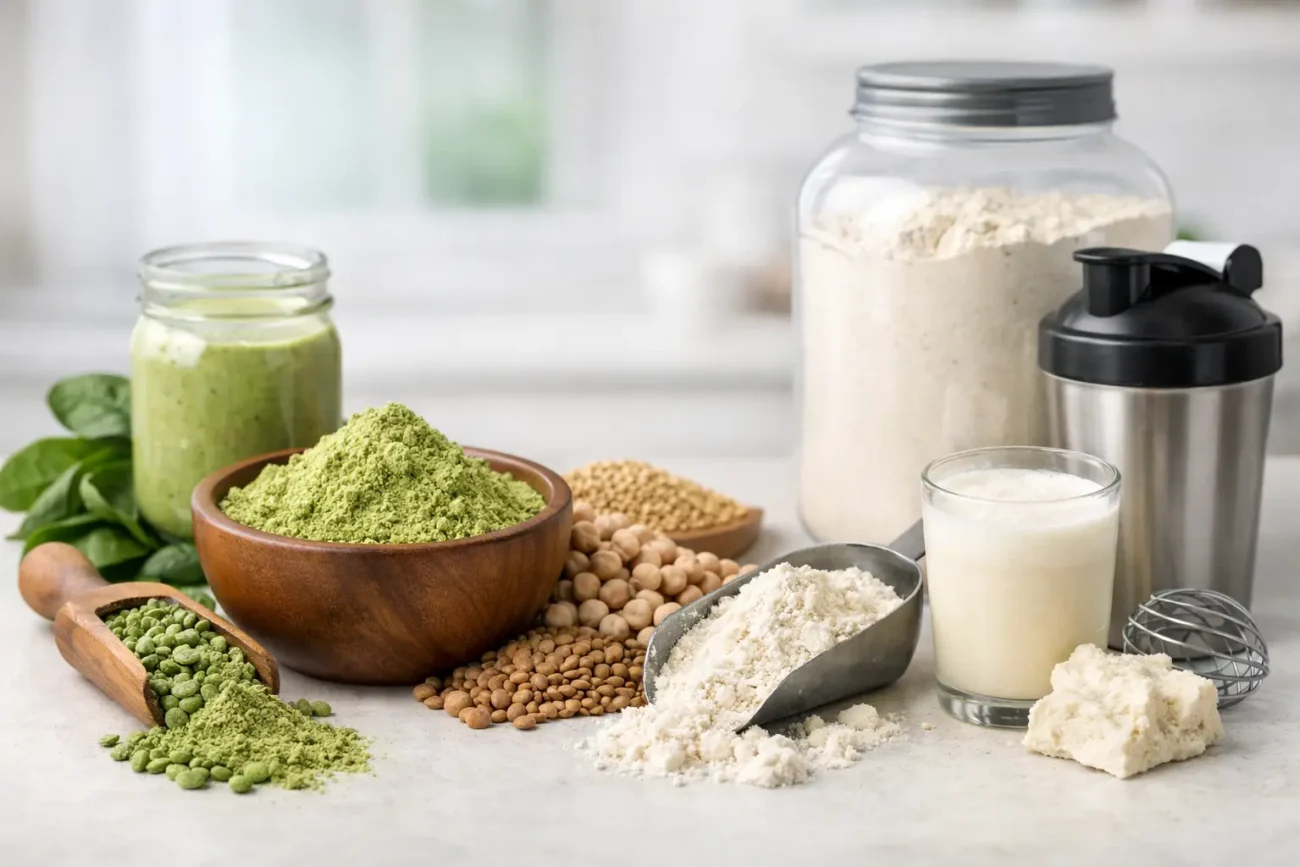
If you are trying to hold on to muscle, recover well from exercise, or simply eat enough protein as your appetite and routine change, the plant protein versus whey protein question is a practical one. Both can help you meet your protein needs. The better choice depends less on wellness trends and more on your digestion, dietary preferences, budget, and how much protein you get from meals.
Protein becomes especially relevant in midlife and beyond. Adults gradually lose muscle mass and strength with age, a process that can accelerate with inactivity, illness, menopause-related changes, or too little dietary protein. Resistance training is still the main signal that tells muscles to stay strong, but protein supplies the raw material for that work.
Plant Protein Versus Whey Protein: The Main Difference
Whey is a milk-derived protein. It is separated from milk during cheese making, then filtered and dried into powder. It is naturally rich in essential amino acids, the amino acids your body cannot make in sufficient amounts on its own. It is also particularly high in leucine, an amino acid that helps trigger muscle protein synthesis, the process of repairing and building muscle tissue.
Plant protein powders may be made from peas, soy, brown rice, hemp, pumpkin seeds, or blends of several sources. Their nutrition varies more widely. Soy is a complete protein, meaning it contains all nine essential amino acids. Pea protein is also a strong option, though it is relatively lower in one amino acid, methionine. Many blended powders pair pea with rice or other proteins to create a more balanced amino acid profile.
This does not mean plant protein is inferior. It means the label matters a little more. A thoughtfully formulated plant blend can provide a protein dose comparable to whey, particularly when it contains 20 to 30 grams of protein per serving and has a good range of essential amino acids.
Why leucine gets attention
Leucine is not magic, but it is useful to understand. Research on muscle protein synthesis suggests that older adults may need a somewhat more substantial protein serving at a meal to get the same muscle-building signal as younger people. Whey tends to deliver that signal efficiently because it is leucine-rich and digested quickly.
Some plant powders provide less leucine per scoop, so a slightly larger serving may be needed to reach a similar effect. That is not necessarily a problem. The practical question is whether the powder fits comfortably into your day and helps you consistently meet your overall protein target.
Which Is Better for Building and Maintaining Muscle?
For pure convenience after a workout, whey has an edge. It is well studied, easily absorbed, and reliably high in essential amino acids. If you lift weights, do regular strength-focused exercise, or are rebuilding strength after a period of inactivity, whey can be a simple and effective option.
But the gap is often overstated. Studies comparing adequate doses of plant and animal protein generally find that muscle gains can be similar when total protein intake is sufficient and people follow a resistance-training program. The key words are adequate doses. A small scoop of low-protein hemp powder is not nutritionally equivalent to a full serving of whey isolate or a higher-protein pea-and-rice blend.
For many adults over 40, the more meaningful change is spreading protein across the day instead of eating very little until dinner. A breakfast with Greek yogurt and fruit, eggs, tofu scramble, or a protein smoothie may do more for meeting daily needs than debating the perfect powder.
Digestion May Make the Decision for You
A protein powder that causes bloating, stomach pain, or an unpleasant aftertaste is unlikely to become a helpful habit. This is where personal tolerance matters.
Whey concentrate contains some lactose, the natural sugar in milk. People with lactose intolerance may find it uncomfortable, especially in larger servings. Whey isolate is filtered more extensively and contains very little lactose, so many people tolerate it better. A true milk allergy is different from lactose intolerance and requires avoiding whey altogether.
Plant powders are naturally dairy-free, but they are not automatically easier on every stomach. Pea protein can feel heavy or cause gas for some people. Powders sweetened with sugar alcohols, such as erythritol or xylitol, or those loaded with gums and added fibers can also cause digestive trouble regardless of the protein source.
If you have a sensitive gut, choose a short ingredient list and start with half a serving. Give it several days before deciding whether it works for you. Mixing powder into a meal or smoothie, rather than drinking it quickly with water on an empty stomach, may also feel better.
Nutrition Beyond the Protein Number
Whey and plant powders differ in more than amino acids. Whey is usually lower in carbohydrates and can be very neutral in flavor, especially unflavored varieties. It may suit someone who wants a straightforward addition to oatmeal, yogurt, or a smoothie.
Plant powders may bring small amounts of fiber and naturally occurring plant compounds, depending on the source. They are useful for people following vegan diets, limiting dairy, or wanting more plant-based foods overall. On the other hand, some have a chalkier texture, stronger flavor, or more sodium and sweeteners than expected.
The front of a tub can make almost any powder sound virtuous. Turn it around. Look for the grams of protein per serving, the serving size, added sugars, sodium, and the ingredient list. If a powder provides only 10 to 15 grams of protein but requires a large scoop, it may be better viewed as a smoothie ingredient than a reliable protein supplement.
Be thoughtful about contaminants and supplements
Protein powders are dietary supplements, not tightly standardized foods. Quality can vary among brands and batches. Choosing products that are independently tested can offer extra reassurance, especially if you use a powder daily or compete in sports where banned-substance testing matters.
Also be cautious with powders that bundle protein with high doses of stimulants, herbs, or vague “metabolism” blends. A plain protein powder is usually easier to evaluate and less likely to interfere with sleep, medications, or a sensitive stomach.
How Much Protein Do You Actually Need?
The standard minimum protein recommendation is designed to prevent deficiency, not necessarily to optimize muscle retention during aging or support active people. Many nutrition experts suggest that healthy older adults and regular exercisers may benefit from more than the minimum, often distributed across meals.
Your ideal amount depends on body size, activity level, medical history, appetite, and goals. Rather than chasing one universal number, begin by looking at your usual day. Do you get a meaningful protein source at breakfast and lunch, or does nearly all of it arrive at dinner? A protein powder can help fill a real gap, but it does not need to replace balanced meals built around foods such as fish, poultry, eggs, dairy, beans, lentils, tofu, tempeh, and whole grains.
If you have chronic kidney disease, are on a medically prescribed diet, or have been advised to limit protein, ask your clinician or a registered dietitian before increasing intake or using supplements regularly.
Choosing the Right Protein for Your Routine
Choose whey if you tolerate dairy, prefer a smooth texture, and want a compact, amino-acid-rich protein source for breakfast or post-exercise meals. Whey isolate may be the better starting point if lactose is an issue.
Choose plant protein if you avoid dairy, eat vegan, want to reduce animal foods, or simply prefer it. Soy protein and well-designed pea-and-rice blends are particularly practical choices for muscle support. Check that the serving provides enough protein to be useful, rather than assuming every plant powder is comparable.
You can also use both. There is no health rule requiring loyalty to one camp. You might use whey in a yogurt smoothie when it agrees with you and keep a plant-based option for travel, dairy-free days, or variety.
The best protein powder is the one that supports meals you enjoy, digestion you can trust, and a strength routine you can maintain. Over months and years, those ordinary, repeatable choices matter far more than whether the scoop in your cabinet came from milk or peas.
