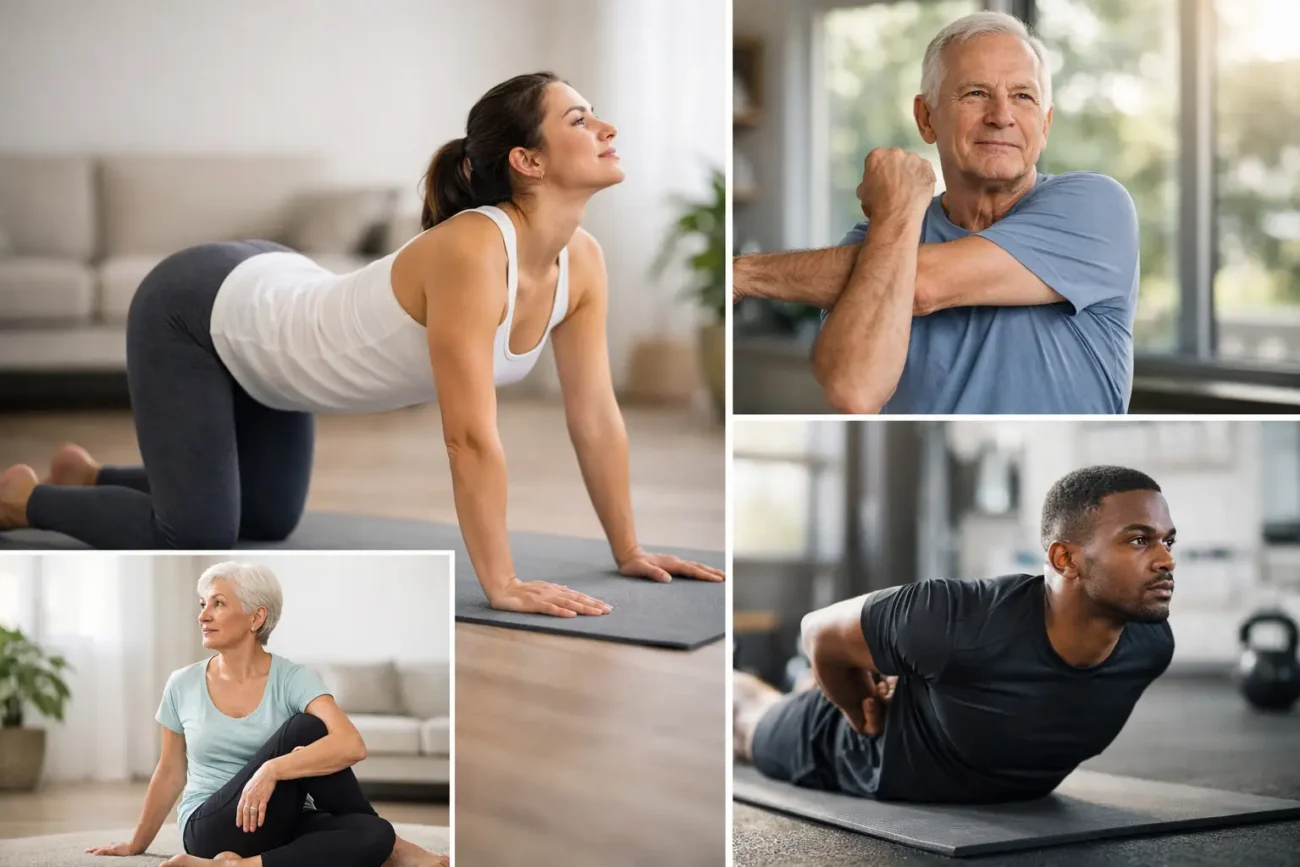
If your shoulders drift forward by late afternoon or your neck feels stiff after reading, driving, or working at a screen, the best exercises for better posture can help. The goal is not to hold yourself rigidly upright all day. It is to build the strength, mobility, and body awareness that make a comfortable, balanced position easier to return to.
Posture changes with the demands of a life, not because you have failed some invisible fitness test. Years of sitting, carrying bags, looking down at devices, reduced muscle mass, old injuries, arthritis, vision changes, and simple fatigue can all affect how you stand and move. Exercise will not erase every natural change in spinal shape, but it can improve how supported, mobile, and confident you feel.
What better posture actually means
Good posture is not military posture: chest pushed out, shoulders yanked back, stomach held in. That position is tiring and can aggravate back discomfort. A more useful definition is the ability to move easily and settle into a position where your head, rib cage, pelvis, and feet share the work efficiently.
For many adults, this means strengthening the upper back, deep neck muscles, core, hips, and glutes while restoring motion through the chest, shoulders, and hip flexors. Exercise professionals often call this a combination of mobility and stability. You need enough range of motion to get into a good position, plus enough strength and endurance to maintain it during ordinary life.
The best exercises for better posture
Start with two or three sessions a week, leaving at least a day between strength-focused workouts if you are new to them. Move slowly, breathe normally, and stop before strain turns into pain. A light resistance band, a wall, and a sturdy chair are enough for most of this routine.
1. Chin tucks
Chin tucks train the small muscles at the front of the neck that help keep the head from creeping forward. They are especially useful if you spend time at a laptop, in the car, or reading.
Sit or stand tall with your eyes level. Without tipping your head down, gently slide your chin straight back as though making a double chin. Hold for three to five seconds, then relax. Aim for 8 to 12 repetitions. The movement should feel subtle. If you feel pinching at the base of the skull, make it smaller and avoid forcing your head backward.
2. Wall angels
Wall angels combine upper-back strength with shoulder mobility, and they reveal where stiffness may be limiting your overhead reach. Stand with your back against a wall, feet a few inches forward, and knees soft. Let the back of your head rest lightly against the wall if that is comfortable.
Place your arms in a cactus shape, with elbows bent. Slowly slide them upward and then back down, keeping your ribs from flaring forward. Your hands and elbows do not need to stay glued to the wall. Work within the range you have. Try 6 to 10 slow repetitions.
3. Band pull-aparts
This simple exercise strengthens the muscles between and around the shoulder blades, which help counter the rounded-shoulder position many of us fall into when tired. Hold a light band at shoulder height with both arms straight and hands about shoulder-width apart.
Pull the band apart by moving your arms outward, allowing your shoulder blades to draw gently back and down. Pause briefly, then return with control. Do 10 to 15 repetitions. Avoid shrugging toward your ears or arching your low back to make the movement larger.
4. Rows
Rows are one of the most useful strength exercises for posture because they train the upper back, rear shoulders, and arms together. You can do them with a resistance band anchored securely at chest height, or with a cable machine if you use a gym.
Stand tall and pull your elbows back alongside your ribs. Think of bringing your shoulder blades toward your back pockets rather than squeezing them as hard as possible. Pause, then slowly extend your arms. Two sets of 8 to 12 repetitions is a practical starting point. If shoulder pain appears in the front of the joint, reduce the range or ask a physical therapist to check your form.
5. Thoracic extension over a chair
The thoracic spine is the middle and upper part of the back. It naturally curves slightly, but prolonged slumping can make it feel stiff, encouraging the head and shoulders to move forward. Gentle extension can restore comfortable motion.
Sit in a sturdy chair with a mid-back-height backrest. Place your hands behind your head, keep your feet grounded, and lean your upper back gently over the chair. Do not crank your neck or force your lower back to arch. Take two or three relaxed breaths, return upright, and repeat 5 to 8 times.
This is mobility work, not a test of flexibility. If you have osteoporosis, a history of spinal fractures, or pain with backward bending, ask your clinician or physical therapist whether this movement is suitable for you.
6. Doorway chest stretch
Tight chest muscles can pull the shoulders forward, though stretching alone will not fix posture. It works best when paired with pulling and rowing exercises that build upper-back strength.
Stand in a doorway with one forearm on the frame, elbow roughly at shoulder height. Step forward until you feel a mild stretch across the chest and front of the shoulder. Hold for 20 to 30 seconds while breathing easily, then switch sides. Repeat once or twice. Keep the stretch gentle, particularly if you have a history of shoulder impingement or rotator cuff problems.
7. Glute bridges
Your glutes help stabilize the pelvis when you stand and walk. When they are weak or underused, the low back and hip flexors often take on more work than they should. Bridges are an approachable way to build hip strength without loading the spine heavily.
Lie on your back with knees bent and feet flat, about hip-width apart. Exhale, gently tighten your abdominal muscles, and press through your heels to lift your hips until your body forms a comfortable line from shoulders to knees. Pause for a breath and lower slowly. Complete 8 to 12 repetitions for one or two sets.
You should feel this mainly in your buttocks and hamstrings, not as a cramp in your lower back. Lower the height of the bridge if your back takes over.
8. Bird dog
Bird dog builds trunk stability while teaching the spine to stay steady as your arms and legs move. That carries over well to lifting groceries, gardening, reaching, and walking.
Begin on hands and knees, with hands below shoulders and knees below hips. Gently brace your midsection as if preparing for a light cough. Reach one leg behind you and the opposite arm forward without letting your torso rotate or sag. Hold for a slow breath, return, and switch sides. Try 6 to 10 repetitions per side.
If balancing feels difficult, move only one limb at a time. Quality matters far more than how far you can reach.
A short routine you can actually keep
A useful posture routine does not need to be long. On two or three nonconsecutive days each week, try chin tucks, wall angels, band pull-aparts or rows, glute bridges, and bird dog. Add the doorway stretch and thoracic extension on most days if they feel good. This can take 15 to 20 minutes.
Walking also belongs in the picture. Brisk walking encourages an upright rhythm, strengthens the legs, and interrupts long periods in one position. If you sit for much of the day, a brief movement break every 30 to 60 minutes may be more helpful than one perfect workout followed by hours of stillness. Stand up, roll your shoulders, take a short walk, or do a few gentle chin tucks.
When posture needs individual guidance
Posture exercises should not cause sharp pain, new tingling, numbness, dizziness, weakness, or pain that travels down an arm or leg. Those symptoms deserve medical attention. It is also wise to get personalized advice if you have significant osteoporosis, a diagnosed spinal condition, recent surgery, a painful shoulder, or a noticeable and worsening change in balance or walking.
A physical therapist can help distinguish normal stiffness and deconditioning from a problem that needs more targeted care. For many people, though, the most effective approach is pleasantly ordinary: regular strength work, gentle mobility, more movement throughout the day, and less pressure to look perfectly upright every minute.
Aim to feel a little more supported, not posed. Over time, that is what better posture tends to look like: a body that can meet the day with less effort and more freedom.
