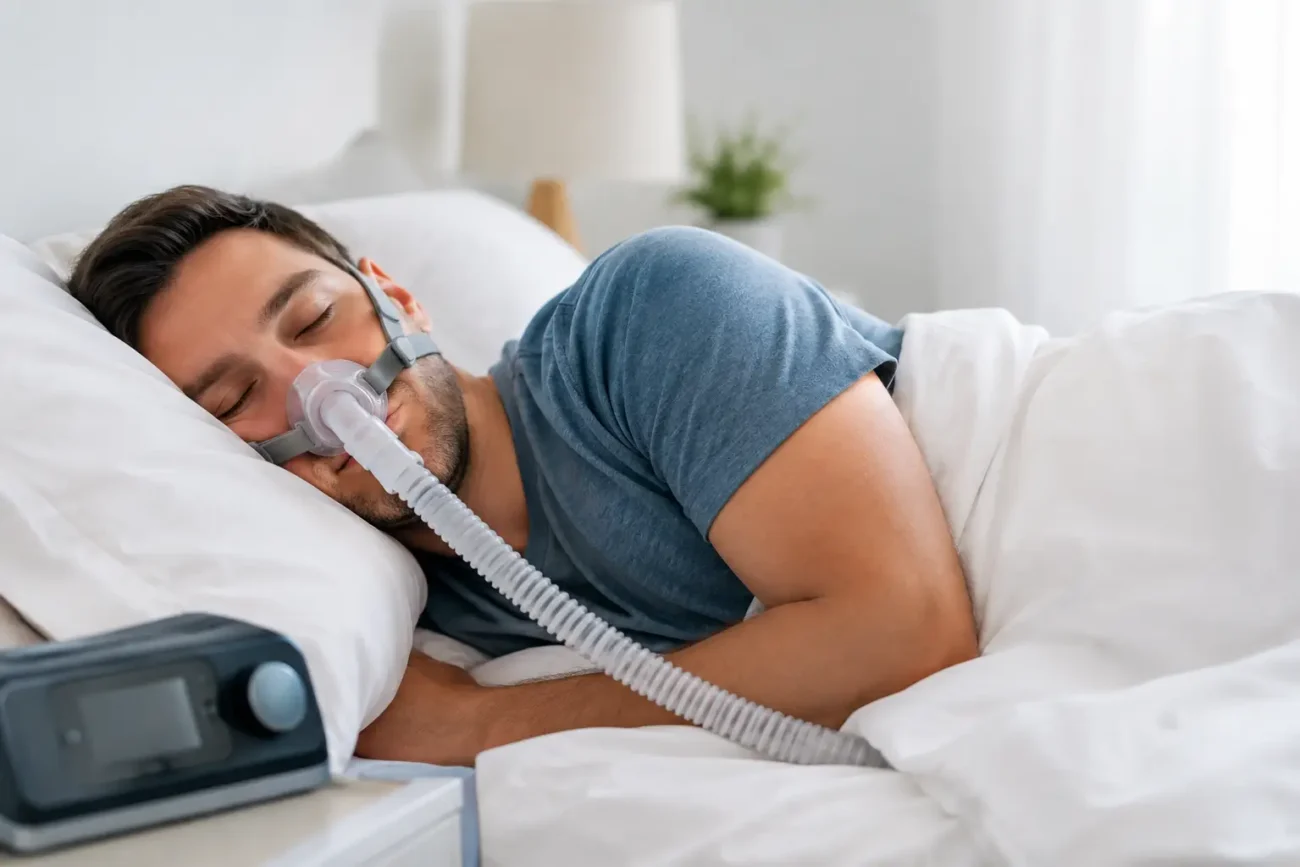
Waking up tired after what should have been a full night of sleep can be frustrating, especially when you are already doing many of the “right” things for your health. This sleep apnea guide can help you recognize when snoring, daytime fatigue, or restless nights may be more than a normal part of getting older.
Sleep apnea is common, treatable, and often missed for years. Many people assume their low energy is caused by a demanding schedule, stress, menopause, weight changes, or aging itself. Those factors can affect sleep, but repeated breathing interruptions deserve a closer look.
What sleep apnea actually is
Sleep apnea is a condition in which breathing repeatedly pauses or becomes too shallow during sleep. These pauses can briefly lower oxygen levels and trigger tiny awakenings that restore breathing. You may not remember waking up, but the disruption can keep your body from spending enough time in restorative sleep.
The most common form is obstructive sleep apnea, or OSA. It happens when the muscles in the throat relax during sleep and the airway narrows or closes. The brain senses the breathing problem and briefly wakes the body enough to reopen the airway.
A less common form, central sleep apnea, occurs when the brain does not consistently send the signals that control breathing. It can be associated with certain medical conditions, medications, or sleeping at high altitude. The evaluation and treatment approach may differ, which is one reason self-diagnosis is not enough.
Sleep apnea guide: signs worth taking seriously
Loud snoring is the symptom people most often associate with sleep apnea, but it is not the whole story. Not everyone who snores has apnea, and not everyone with apnea snores loudly enough to be noticed. This is particularly relevant for women, whose symptoms may be less obvious and are sometimes mistaken for insomnia, anxiety, or hormonal sleep changes.
Common clues include waking up gasping or choking, dry mouth or headache in the morning, frequent nighttime bathroom trips, night sweats, and restless sleep. During the day, you might feel sleepy in quiet situations, struggle to concentrate, become more irritable than usual, or rely heavily on caffeine just to feel functional.
A bed partner may notice cycles of snoring, silence, and then a snort or gasp. If you sleep alone, a wearable device may show disrupted sleep or oxygen patterns, but it cannot diagnose sleep apnea on its own. Those data can be useful conversation starters with a clinician, not a final answer.
Sleep apnea can also show up in less expected ways. Some people notice worsening blood pressure, a reduced ability to exercise, low mood, decreased libido, or a sense of brain fog that does not improve with extra time in bed. These symptoms have many possible causes, so the goal is not to assume apnea is the answer. It is to make sure it is not overlooked.
Why symptoms can change in midlife
Risk often increases with age because airway muscles and tissue can change over time. Weight gain can contribute, particularly around the neck and abdomen, but sleep apnea affects people in smaller bodies too. Jaw shape, nasal obstruction, family history, alcohol use, and certain medications can all play a role.
For women, the transition through perimenopause and menopause may change sleep and breathing patterns. Shifts in hormones can influence upper-airway stability, while hot flashes and insomnia can make it harder to spot an additional breathing disorder. For men, lower testosterone, weight changes, and cardiovascular risk factors may coexist with sleep apnea. None of this means sleep trouble is inevitable. It means persistent symptoms are worth discussing rather than simply accepting.
Why treating it matters beyond snoring
Untreated sleep apnea places repeated stress on the cardiovascular system. The body responds to breathing interruptions with surges in stress hormones and changes in heart rate and blood pressure. Over time, obstructive sleep apnea is associated with high blood pressure, irregular heart rhythms, heart disease, stroke, and type 2 diabetes.
It can also affect safety and quality of life more immediately. Excessive daytime sleepiness raises the risk of drowsy driving and accidents. Fragmented sleep can make pain harder to manage, amplify mood symptoms, and make healthy habits feel much harder to maintain. If you have ever felt that you are exercising, eating well, and still running on empty, sleep quality may be part of the picture.
The relationship works both ways. Sleep apnea can make blood pressure and blood sugar more difficult to manage, while conditions such as obesity, heart failure, and nasal congestion can worsen sleep-disordered breathing. That is why treatment is often part of a broader health plan rather than a single isolated fix.
How testing works
Start with a primary care clinician, sleep specialist, or another qualified health professional. They will ask about your symptoms, medical history, medications, alcohol use, sleep schedule, and any observations from a partner. They may also consider other causes of fatigue, such as anemia, thyroid disorders, depression, medication effects, or chronic insomnia.
Many people can be evaluated with a home sleep apnea test. You wear a small device overnight that tracks breathing and oxygen-related measures. Home testing is convenient and can be a good option when obstructive sleep apnea is strongly suspected.
An overnight sleep study in a sleep center, called polysomnography, gathers more detailed information. It can monitor breathing, oxygen levels, heart rhythm, movement, and sleep stages. It may be recommended when a home test is negative despite strong symptoms, when central sleep apnea is a concern, or when other sleep disorders may be involved.
Do not let concern about a sleep lab stop you from seeking care. Most studies are designed to be as comfortable as possible, and a single imperfect night can still provide useful information.
Treatment is not one-size-fits-all
For moderate to severe obstructive sleep apnea, continuous positive airway pressure, usually called CPAP, is commonly the most effective treatment. The machine delivers gentle air pressure through a mask to keep the airway open. It can take time to adapt, but mask fit, humidity, pressure settings, and coaching make a major difference. A poor first experience does not mean CPAP will not work for you.
Some people with mild to moderate OSA may be candidates for a custom oral appliance fitted by a dentist with sleep-medicine training. It shifts the lower jaw forward to help keep the airway open. Oral appliances can be easier to travel with, though they may not work as well as CPAP for everyone and can cause jaw discomfort or bite changes.
Lifestyle changes can support treatment, but should not be presented as a substitute for medical care when apnea is significant. If weight loss is appropriate for you, even a modest change may reduce severity, though it does not guarantee a cure. Regular activity, treating nasal allergies, limiting alcohol close to bedtime, and reviewing sedating medications with a clinician can also help.
Sleeping on your side may improve breathing for people whose apnea is mainly worse on their back. Positional therapy can be useful, but it depends on the results of your sleep study. Surgery and implantable nerve-stimulation options may be considered in selected cases, usually after a detailed evaluation of anatomy and prior treatments.
What you can do this week
If apnea sounds possible, write down what you are noticing: bedtime and wake time, morning symptoms, daytime sleepiness, snoring reports, alcohol intake, and any episodes of gasping. Bring that record to an appointment. If you share a bedroom, ask your partner what they have observed, since they may notice breathing pauses you never hear.
Avoid driving if you feel unusually sleepy, especially on long or monotonous trips. And do not borrow someone else’s CPAP machine or buy an over-the-counter device as a replacement for testing. The right treatment depends on the type and severity of your breathing disorder.
A good night’s sleep should leave you more able to participate in your life, not simply get through it. If your nights are noisy, restless, or strangely unrefreshing, asking about sleep apnea is a practical step toward protecting your energy and long-term health.
