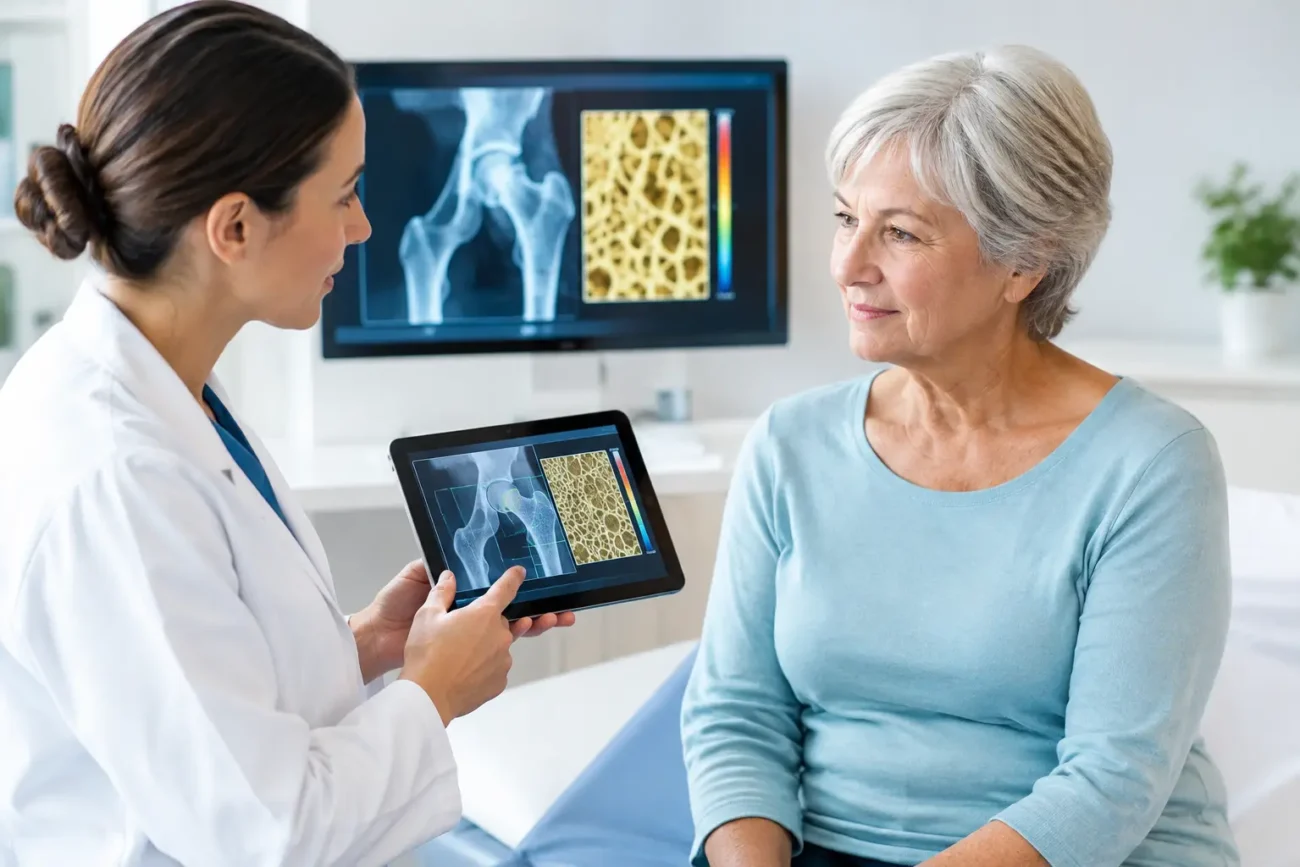
A broken wrist after a routine fall, new back pain after lifting a suitcase, or a parent’s hip fracture can make bone health feel suddenly personal. Bone density tests offer a clear, low-effort way to learn whether your bones may be more vulnerable than you realize, often before a fracture is the first sign.
Bone loss is usually silent. You cannot reliably feel your bone density changing, and being active or eating well does not automatically rule out risk. A test is not a judgment on how well you have cared for yourself. It is simply one useful piece of information for making thoughtful decisions about your health as you age.
What bone density tests actually measure
The standard test is called a DXA scan, short for dual-energy X-ray absorptiometry. It uses very small amounts of radiation to estimate the mineral content of bone, usually at the hip and lower spine. Those are common sites for osteoporotic fractures and are especially useful for predicting future fracture risk.
The appointment is typically quick and painless. You lie still, fully clothed in comfortable garments without metal fasteners, while a scanner passes over your body. It is not an enclosed machine like an MRI, and it does not involve needles or contrast dye. Most scans take roughly 10 to 20 minutes.
A DXA scan measures density, but your clinician will interpret it alongside the bigger picture: your age, medical history, medications, previous fractures, family history, body weight, smoking status, and fall risk. Bone strength is about more than a single number. Bone quality, muscle strength, balance, and the circumstances of a fall matter, too.
Who should consider bone density tests?
Screening recommendations vary somewhat among professional organizations and countries, so your own clinician is the best person to guide timing. In the United States, many experts recommend routine screening for women beginning at age 65. Postmenopausal women younger than 65 may benefit sooner if they have risk factors. Recommendations for men are less uniform, but testing is commonly considered around age 70 or earlier when risks are present.
A test may be worth discussing before those ages if you have had a fracture from a fall that would not normally cause a broken bone, such as falling from standing height. It is also reasonable to ask about testing if you have gone through menopause early, have a close family history of hip fracture, are underweight, smoke, drink heavily, or have lost noticeable height.
Certain health conditions and medicines can raise concern as well. Long-term use of oral corticosteroids, such as prednisone, is a well-known example. Rheumatoid arthritis, celiac disease, inflammatory bowel disease, kidney or liver disease, thyroid disorders, type 1 diabetes, and conditions that affect sex hormones can also influence bone health. For men, low testosterone and some prostate cancer treatments may be relevant.
You do not need to wait for a dramatic event to bring this up. A routine midlife or preventive-care visit is a perfectly appropriate time to ask, “Do my risk factors make a bone density test useful now?”
Menopause is a meaningful turning point
Estrogen helps slow bone breakdown. When estrogen levels decline around menopause, bone loss can speed up, particularly in the first several years. That does not mean every woman will develop osteoporosis, but it explains why menopause is an important point for reassessing bone health.
If you are in perimenopause, the answer to whether you need testing may depend on your personal risk profile rather than age alone. A clinician may also consider whether irregular periods, surgical removal of the ovaries, treatment for breast cancer, or other factors have reduced estrogen exposure earlier than expected.
Understanding DXA results without getting lost in the numbers
Your DXA report commonly includes a T-score. This compares your bone density with that of a healthy young adult of the same sex. For postmenopausal women and men age 50 and older, it is generally the main score used to classify bone density.
A T-score of -1.0 or above is generally considered within the normal range. A score between -1.0 and -2.5 is often described as low bone mass, sometimes called osteopenia. A score of -2.5 or lower meets the bone-density definition of osteoporosis.
Those labels can sound stark, but they are not a complete forecast of your future. Someone with low bone mass may never have a fracture, while someone with a less concerning T-score could still be at elevated risk because of falls, medication use, or a previous fracture. A clinician may use a fracture-risk calculator, often called FRAX, to estimate the chance of a major fracture over the next 10 years. That estimate can help determine whether lifestyle measures alone are reasonable or whether medication deserves a conversation.
If you are younger than 50, premenopausal, or a man under 50, your report may emphasize a Z-score instead. This compares you with people of a similar age and sex. A low Z-score can prompt a search for an underlying medical cause rather than being interpreted in exactly the same way as a T-score.
How to prepare for a scan
Preparation is usually simple. Wear loose clothing without zippers, underwire, belts, or metal buttons if possible. Tell the imaging center if you might be pregnant or if you recently had a barium study, CT scan with contrast, or nuclear medicine test, since these can occasionally affect timing.
Many centers ask patients not to take a calcium supplement for about 24 hours before the scan. Follow the specific instructions you receive, as practices can differ. You can generally eat, drink, and take your usual medications unless you are told otherwise.
Bring a list of medications and any history of fractures, especially fractures after age 50. If you have had previous DXA scans, having the older reports available can be very helpful. A trend over time is often more informative than looking at one result in isolation.
What happens after the result
A normal result does not mean you can forget about bone health forever. How often to repeat testing depends on your age, starting score, risk factors, and whether you begin a medicine that affects bones. For some people, a repeat scan is not needed for several years. For others, including people taking osteoporosis medication or long-term steroids, closer follow-up may make sense.
If your result shows low bone mass or osteoporosis, the next step is not automatically a prescription. Your clinician may first look for reversible contributors, such as low vitamin D, an overactive thyroid, poor calcium intake, unintended weight loss, or a medication that can be adjusted. Medication can be strongly beneficial for people at high fracture risk, but the choice depends on the pattern of bone loss, kidney function, digestive issues, other health conditions, and personal preferences.
Lifestyle still matters at every score. Weight-bearing movement, such as brisk walking, stair climbing, hiking, or dancing, helps challenge bones. Resistance training supports both bone and muscle, which can improve stability and make falls less likely. Exercises that challenge balance, including tai chi or targeted balance work, deserve equal attention.
Nutrition is part of the picture, but more is not always better. Most adults benefit from getting adequate calcium through food when possible and ensuring sufficient vitamin D, especially when sun exposure or dietary intake is limited. Supplements can be useful for some people, yet high-dose calcium or vitamin D without a clear need is not automatically safer or more effective. Discuss amounts with a qualified clinician, particularly if you have kidney stones, kidney disease, or take multiple supplements.
A bone density result is best viewed as an early signal, not a verdict. Whether your scan is reassuring or calls for action, it gives you a practical place to start a calmer, more informed conversation about protecting your mobility and independence for the years ahead.
