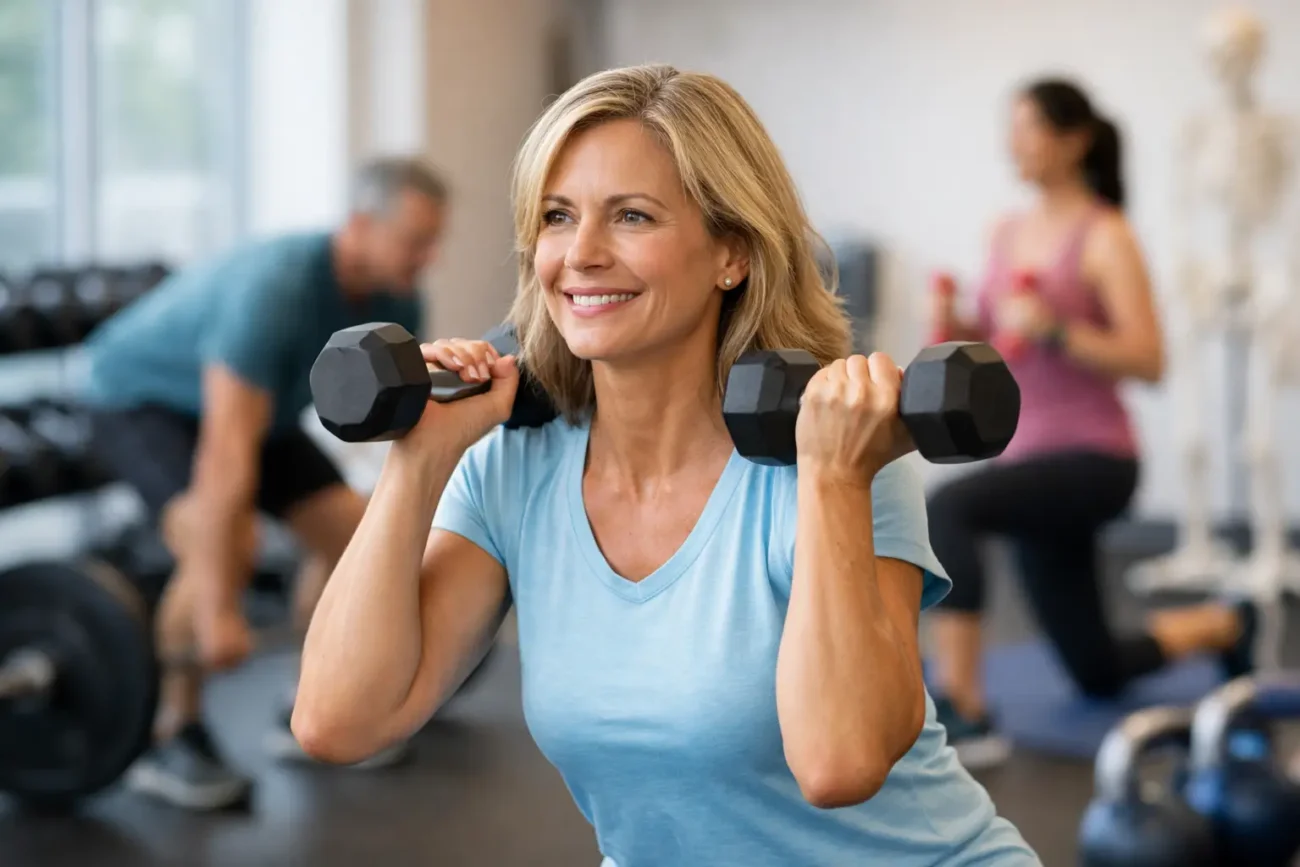
If you are trying to protect your bones as you get older, the best exercises for bone density are not necessarily the longest or sweatiest workouts. Bones respond to a particular kind of message: regular, appropriately challenging force. That can come from brisk walking, strength training, stair climbing, or a carefully chosen higher-impact activity if your joints and medical history allow it.
Bone is living tissue. It continually breaks down and rebuilds itself, and physical loading helps tell the body that strong bones are still needed. This matters for everyone after midlife, but especially for women during and after menopause, when lower estrogen can speed bone loss. Men also lose bone with age, often more gradually, and benefit from the same basics: strength, impact where appropriate, good nutrition, and fall prevention.
What Makes an Exercise Good for Bone Density?
The most useful exercises generally fall into two categories: weight-bearing exercise and resistance training. Weight-bearing means you are supporting your body weight through your feet or hands against gravity. Resistance training means your muscles pull against a load, which creates healthy stress at the points where muscle attaches to bone.
Impact can add another bone-building signal. Think of the brief ground forces from hopping, jogging, or jumping. But more impact is not automatically better. The right dose depends on your current fitness, balance, joint comfort, and whether you have osteopenia, osteoporosis, or a history of fracture.
Swimming and cycling are excellent for heart health and mobility, but because they place relatively little load on the skeleton, they should not be your only forms of exercise if bone density is a goal. They pair well with strength training and weight-bearing movement.
The Best Exercises for Bone Density
Brisk walking and hill walking
Walking is a realistic foundation because it is accessible, repeatable, and weight-bearing. A relaxed stroll is still worthwhile for overall health, but bone benefits are likely greater when the walk feels purposeful. Pick up the pace, include hills, or use stairs when your knees and balance tolerate them.
For someone who has been sedentary, a consistent walking habit is a very good place to begin. If you already walk most days, changing the challenge matters more than simply adding more flat miles. A hillier route, a few stair intervals, or a faster pace can provide a fresh stimulus.
Strength training with progressive resistance
Strength training is one of the most valuable things you can do for bones and muscles at the same time. Exercises that work major muscle groups, especially around the hips, spine, and legs, are particularly useful. Squats to a chair, step-ups, deadlifts or hip hinges, lunges, rows, overhead presses, and chest presses are practical examples.
The load needs to be meaningful for you. Very light weights may be a starting point, but eventually the final few repetitions of a set should feel challenging while your form remains controlled. This is called progressive overload: gradually increasing weight, repetitions, range of motion, or exercise difficulty as your body adapts.
Machines, dumbbells, resistance bands, kettlebells, and body-weight exercises can all work. Free weights often demand more balance and coordination, while machines can feel more stable when you are learning or returning after an injury. There is no prize for choosing the most complicated option. The best plan is one you can perform safely and continue for months.
Stair climbing and step-ups
Stairs provide weight-bearing work, leg strengthening, and a modest impact element without requiring a run. They can be especially appealing if jogging no longer feels good on your joints. Start with a handrail if needed, and use a step height that lets you move without pain or wobbling.
Step-ups on a low, sturdy platform offer a similar benefit at home or in the gym. Focus on placing your whole foot on the step and pressing through the working leg rather than pushing hard off the trailing foot. That small adjustment makes the exercise more of a strength builder.
Jogging, hopping, and jumping – for the right person
Higher-impact exercise can be helpful because bones respond well to varied, brief forces. Running, racquet sports, dancing with jumps, and simple hopping drills may all fit the picture. But this category requires judgment, not bravado.
If you have osteoporosis, a prior fragility fracture, persistent joint pain, significant balance concerns, or have been inactive for a long time, do not start with jump training on your own. Ask your clinician or a physical therapist what is appropriate. For many people, brisk walking and progressive strength work are more than enough to begin building a strong routine.
If you are cleared for impact and already have a base of strength, start small. A few gentle hops while holding a counter or short intervals of light jogging can be plenty. Land softly, keep the volume low at first, and allow rest days between harder impact sessions.
Balance and posture work
Balance exercises do not directly build much bone, but they help protect it by reducing fall risk. That is a meaningful part of bone health, particularly after 50. Practice standing on one leg near a counter, heel-to-toe walking, controlled step-ups, tai chi, or yoga poses that challenge balance without forcing awkward positions.
Posture and back-strengthening exercises matter, too. Rows, bird dogs, and carefully coached back-extension work can support the muscles that help you stand tall. If osteoporosis affects your spine, avoid repeated deep forward bending or forceful twisting, especially when lifting a load. These movements can place extra stress on vulnerable vertebrae.
A Simple Weekly Routine for Stronger Bones
A useful goal is to combine weight-bearing movement most days with strength training two or three nonconsecutive days per week. You do not need to do everything in one workout.
For example, walk briskly for 25 to 40 minutes on several days, including hills or stairs once or twice weekly. On two or three other days, complete a full-body strength session built around a squat or sit-to-stand, a hip hinge, a pushing exercise, a pulling exercise, and a step-up or lunge pattern. Add a few minutes of balance practice at the end or while waiting for the coffee to brew.
Start with one or two sets of each strength exercise and choose a resistance that feels challenging by the end of roughly 8 to 12 controlled repetitions. As that becomes easier, add a little weight or another set. Consistency and gradual progression matter more than changing workouts every week.
When to Get Personal Guidance
Exercise is usually beneficial, but bone health is one area where your individual history changes the plan. Talk with a healthcare professional before beginning impact training if you have diagnosed osteoporosis, osteopenia with other risk factors, unexplained back pain, a prior fracture from a minor fall, or a condition or medication that affects bone.
A bone density scan, often called a DEXA scan, can help clarify your starting point when your clinician recommends one. A physical therapist or qualified exercise professional can also teach safer modifications, particularly if you have arthritis, joint replacements, pelvic floor symptoms, or balance limitations.
Exercise works alongside, not instead of, the rest of bone care. Adequate protein, calcium from food when possible, vitamin D when needed, sleep, and avoiding smoking all influence the bigger picture. Medication may also be appropriate for some people at higher fracture risk.
The most encouraging part is that you do not need a perfect fitness identity to support your skeleton. A stronger set of legs, a regular walk with a little purpose behind it, and the confidence to move steadily through daily life are meaningful investments in the years ahead.

9 thoughts on “Best Exercises for Bone Density After 40”