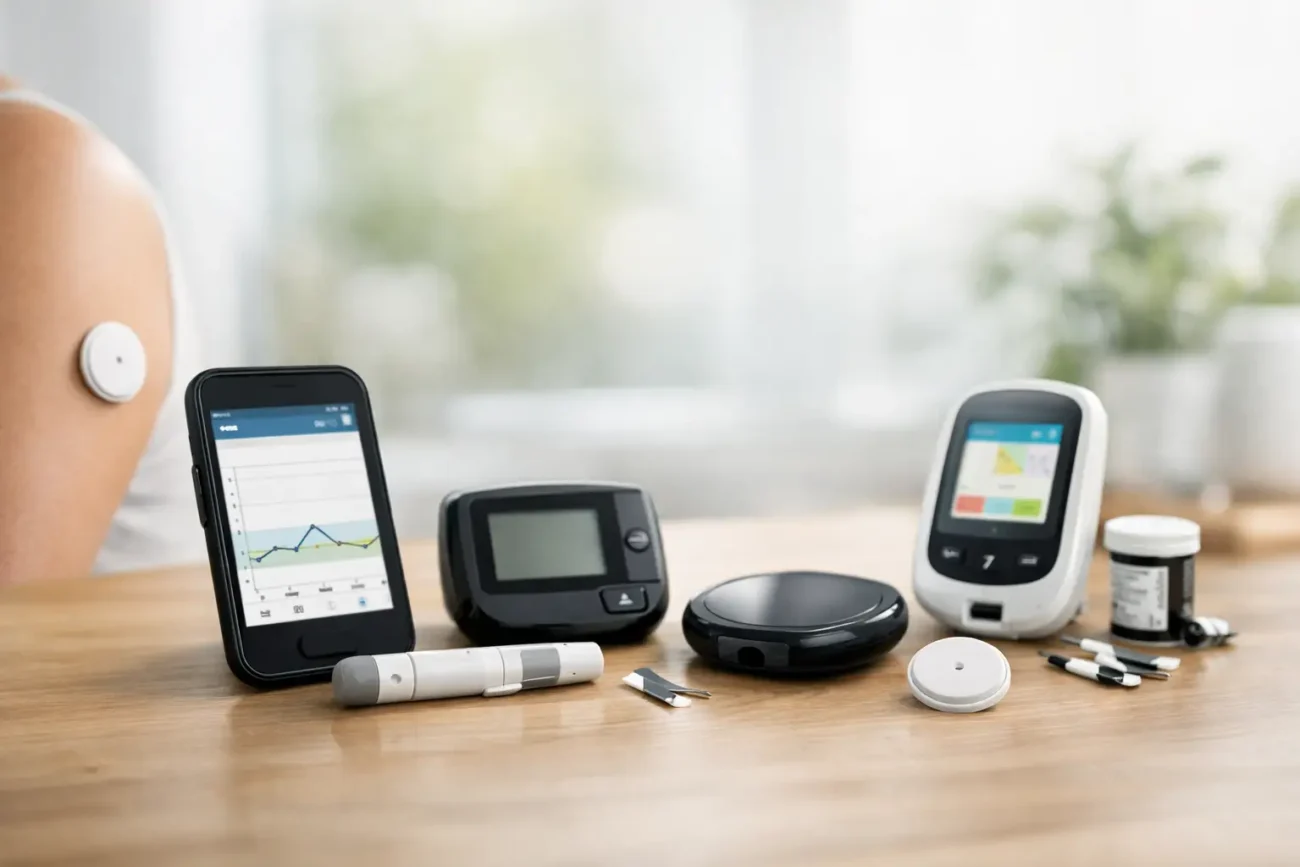
A glucose monitor can turn a vague feeling – the afternoon slump, restless sleep, or a workout that leaves you strangely drained – into a number. But a useful glucose monitor review has to go beyond the device’s screen, app, or subscription price. The right monitor depends on why you want glucose information in the first place and how you will use it without letting the data run your day.
For people with diabetes, a monitor is often an essential part of a clinician-guided care plan. For people without diabetes who are curious about energy, food, or metabolic health, it can be an interesting learning tool, but it is not a diagnosis machine or a shortcut to better health.
Glucose Monitor Review: Two Types to Know
Most home glucose monitoring falls into two categories: blood glucose meters and continuous glucose monitors, usually called CGMs. They answer related questions in very different ways.
Blood glucose meters: the practical baseline
A traditional blood glucose meter uses a small finger-stick blood sample and a disposable test strip. It gives you a reading at a specific moment. These devices are compact, relatively inexpensive to start with, and familiar to many people managing diabetes or prediabetes.
Their biggest advantage is directness. If you want to know your fasting glucose in the morning or check a reading when you feel shaky, a meter provides an immediate snapshot. Most established meters are designed to meet regulatory accuracy standards when used correctly, although real-world results can be affected by hand residue, expired strips, temperature, dehydration, and technique.
The trade-off is that isolated checks cannot show the full curve. A reading of 105 mg/dL two hours after lunch tells you something, but it does not reveal whether glucose rose quickly, peaked earlier, or dipped later. Finger-sticks can also become tedious if you are checking often.
Continuous glucose monitors: more context, more cost
A CGM uses a small sensor worn on the upper arm or abdomen. The sensor measures glucose in the fluid between cells, called interstitial fluid, and sends readings to a phone or receiver every few minutes. It can show trends, alerts, overnight patterns, and the direction glucose is moving.
For someone using insulin or at risk of low blood sugar, that trend information can be genuinely valuable. A CGM may also help a person with type 2 diabetes see how meals, activity, stress, and medication affect them over several days rather than one reading at a time.
For general wellness users, the appeal is obvious: you can see a graph after a meal instead of guessing. Still, that graph needs perspective. CGMs can lag behind blood glucose during rapid changes, such as hard exercise or recovery from a low. Compression from sleeping on the sensor may produce falsely low readings. Skin irritation, adhesion problems, and replacement costs are common practical complaints.
What Accuracy Really Means
It is reasonable to want the most accurate glucose monitor available. Yet no home device produces a perfect laboratory value every time. Regulatory standards allow a degree of difference between a device reading and a reference measurement, and that difference matters most near a treatment threshold.
With CGMs, focus less on one surprising number and more on the pattern over several days. If a reading seems inconsistent with how you feel, or if you are about to make a treatment decision, follow the instructions for your device. This may mean confirming with a finger-stick meter, especially for people who use insulin or have symptoms of low glucose.
With finger-stick meters, clean and dry hands before testing. A trace of fruit, juice, lotion, or food on your fingers can falsely raise a result. Use strips before their expiration date and store them as directed. These unglamorous details often matter more than minor differences between brands.
The Features Worth Paying Attention To
A polished app is nice, but it should not be the main reason you choose a monitor. Start with the day-to-day realities.
For a blood glucose meter, consider the ongoing price and availability of test strips. A very inexpensive meter can become costly if its strips are hard to find or poorly covered by insurance. Look at display size, backlighting, memory, and whether the buttons are manageable if you have reduced dexterity or vision changes. Some people prefer a simple meter that works without a phone.
For a CGM, check sensor wear time, whether it requires calibration, alarm options, phone compatibility, and how easily data can be shared with a family member or clinician when needed. If you swim, sweat heavily, or live in a hot climate, adhesion deserves extra attention. A sensor that routinely peels off early is not a good value, however impressive the software may be.
Also ask how much data you truly want. Constant alerts can be reassuring for someone at risk of hypoglycemia. For someone simply experimenting with meal timing, they may create unnecessary anxiety. The best settings are the ones that support a clear purpose rather than interrupt every meeting, meal, or night of sleep.
Who May Benefit Most From a Monitor
Glucose monitoring is most clearly useful for people with type 1 diabetes, many people with type 2 diabetes, gestational diabetes, or anyone taking medicines that can cause hypoglycemia. The choice of device should be made with the prescribing clinician, since medication regimen, insurance coverage, and history of low blood sugar all affect the decision.
It may also be helpful for someone with prediabetes who has a specific question and a plan to act on the answer. For example, short-term finger-stick monitoring can help show whether a repeatable breakfast leaves you satisfied and steady or is followed by a sharp rise and hunger. A clinician or registered dietitian can help interpret the results in the context of lab work, family history, sleep, weight changes, and medications.
The evidence is less settled for healthy adults using CGMs purely for optimization. Glucose responses to the same meal can vary from one person to another, and they can vary in the same person depending on sleep, stress, alcohol, illness, menstrual or menopausal changes, and recent activity. That does not make the data meaningless. It means a few days of colorful graphs should not lead to sweeping food rules.
How to Use the Information Without Overreacting
A monitor works best when it helps you test a practical idea. Keep meals reasonably consistent for a few days, then compare one change at a time: adding protein and fiber at breakfast, taking a 10- to 20-minute walk after dinner, or moving a late dessert earlier. Notice not only the graph but also hunger, energy, mood, and sleep.
Avoid labeling a single food as “good” or “bad” because of one reading. A higher rise after a bowl of oatmeal may be different when it is paired with yogurt, nuts, or eggs. A reading after a restaurant meal may reflect more than carbohydrates alone. Meals are mixed, life is variable, and health is bigger than glucose.
If you have a history of disordered eating, intense food anxiety, or obsessive tracking, a CGM may not be the right wellness tool. It is okay to decide that more numbers are not more helpful. The same is true if the data makes you restrict nourishing foods or exercise to “correct” a graph.
Costs, Coverage, and Privacy
Before buying, calculate the cost for at least a month, not just the starter kit. For meters, include lancets and strips. For CGMs, include sensors, optional receivers, and any membership or coaching fee. Coverage varies widely by insurer, diagnosis, medication use, and country, so a device that looks affordable online may not be the sensible long-term choice.
Read the app’s privacy terms as well. Glucose data is personal health information, and some consumer wellness programs may collect data for research, marketing, or program analytics. You should be able to understand what is collected, who can access it, and whether you can delete your account.
When to Talk With a Clinician
Bring repeated concerns to a health professional rather than self-diagnosing from a home device. This includes consistently elevated fasting readings, frequent symptoms of low blood sugar, unexplained weight loss, excessive thirst or urination, blurry vision, or readings that do not match how you feel. A laboratory A1C test and other evaluation can answer questions a consumer monitor cannot.
The most helpful glucose monitor is not necessarily the newest or most data-heavy one. It is the one that fits your medical needs, budget, comfort level, and ability to turn patterns into calm, useful choices. If a device helps you notice that a walk after dinner improves your sleep or that a more substantial breakfast steadies your morning, that is enough data to make a difference.
