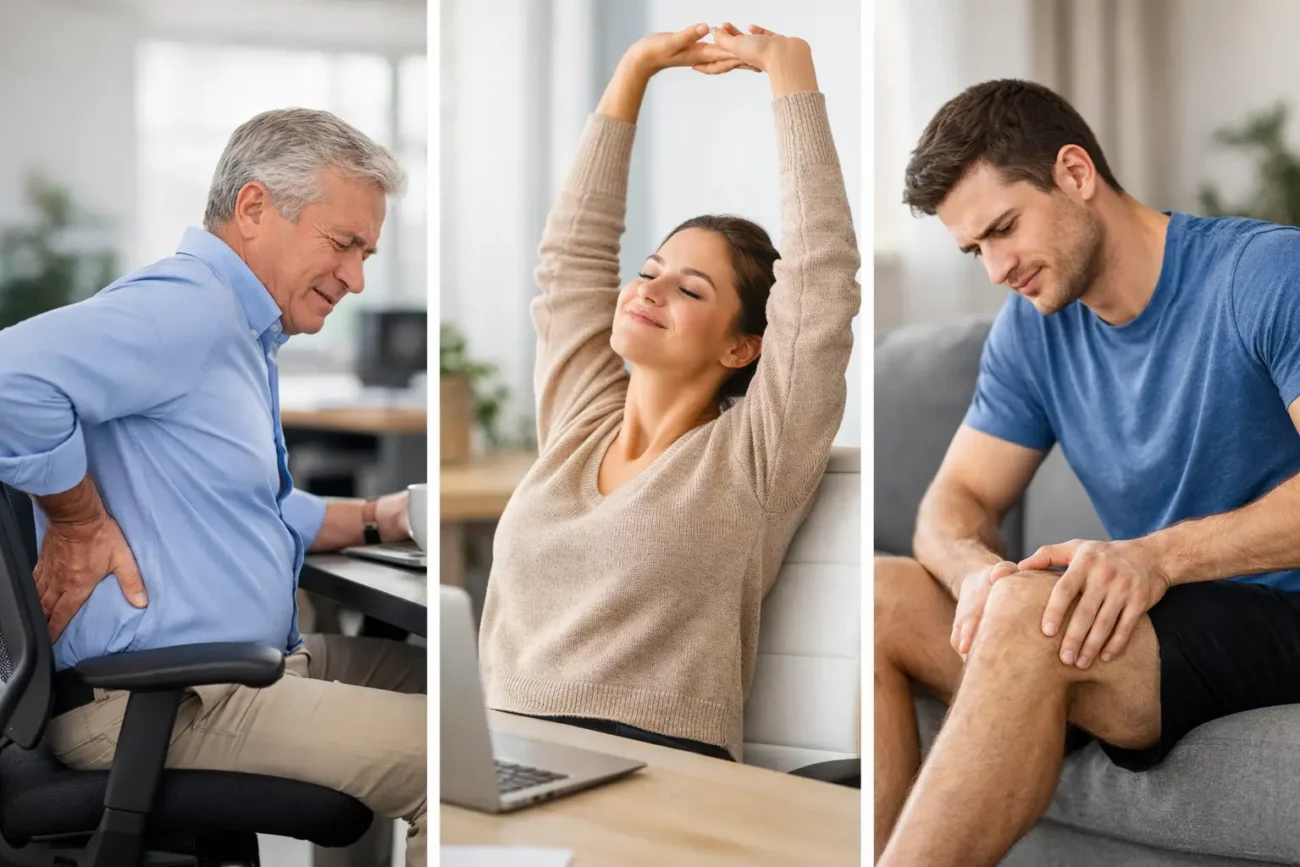
A chair should not leave you stiff, achy, or limping through the first few steps after you stand. To reduce pain from sitting, the goal is usually not to find one perfect posture, but to give your back, hips, and legs more frequent chances to move.
Sitting-related discomfort is especially common in midlife, when old injuries, arthritis, reduced muscle strength, or long workdays can make the body less forgiving of long still periods. The encouraging part: small adjustments to your setup and routine can make a meaningful difference, often without buying specialized equipment.
Why Sitting Can Start to Hurt
Sitting puts your body in a sustained position. Your hip flexors remain shortened, your glute muscles do very little, and the muscles supporting your trunk may gradually fatigue. If you lean forward toward a laptop or sink into a soft couch, the strain on the neck and lower back can increase.
But sitting itself is not automatically harmful. A comfortable, supported seated position is useful when you need to work, drive, eat, or rest. The problem is usually too much uninterrupted sitting, particularly when pain is already present.
Pain can show up in different places. A dull low-back ache may be related to muscle fatigue or prolonged slouching. Tightness at the front of the hips can make standing upright feel uncomfortable. Pain near the sit bones may come from pressure against the chair, while tingling or burning down a leg may suggest nerve irritation. Those patterns deserve different responses, which is why a one-size-fits-all “sit up straight” rule often falls short.
Reduce Pain From Sitting by Changing Position More Often
The most useful posture is often your next posture. Research and clinical guidance generally support breaking up sedentary time, rather than trying to hold a rigidly “perfect” pose for hours.
Try setting a gentle cue to stand or move every 30 to 60 minutes. You do not need a formal workout break. Walk to refill your water, put away a few dishes, climb a flight of stairs, or simply stand and stretch for a minute or two. If an hourly break is unrealistic during a meeting-heavy day, begin with one movement break in the morning and one in the afternoon. Consistency matters more than precision.
During long car rides, stop when practical to walk for a few minutes. On a plane or train, ankle pumps, heel raises, and occasional standing can help reduce stiffness. If your pain tends to build by late afternoon, moving before it starts may work better than waiting until you are quite sore.
Make Your Chair Work With Your Body
An expensive chair is not required, although a chair that fits you reasonably well can help. Aim for a setup that feels supported rather than forced.
Your feet should rest on the floor or a stable footrest, with your knees roughly level with or slightly lower than your hips. If your chair is too high, a firm box or footrest under the feet can reduce pressure at the backs of the thighs. If it is too low, raising the seat can make it easier for the hips and low back to stay comfortable.
Let the back of the chair support the natural inward curve of your lower back. A small rolled towel or lumbar cushion may help, especially in a flat-backed office chair or car seat. It should be modest support, not a large cushion that pushes you uncomfortably forward.
Keep commonly used items close enough that you are not repeatedly twisting or reaching. For desk work, place the screen in front of you at a height that does not make you bend your neck down for long stretches. A laptop alone often encourages a rounded posture. Raising the screen and using a separate keyboard and mouse can be a practical improvement if you work that way regularly.
A standing desk can be useful, but it is not a cure. Standing still all day can aggravate feet, knees, hips, or low-back pain for some people. Alternating between sitting, standing, and walking is usually the better plan.
Use Gentle Movement to Ease Stiff Hips and Back
When discomfort comes from sitting, aggressive stretching is rarely necessary. Gentle, repeatable movement is often more comfortable and more sustainable. Move slowly and stay well short of sharp pain.
Start With a Short Reset
Stand up and take a slow walk around the room. Then try a few easy shoulder rolls, several gentle side bends, and a few hip movements such as lifting one knee at a time while holding a counter for balance. This can restore circulation and remind your body that it has more options than one fixed position.
If the front of your hips feels tight, try a supported hip-flexor stretch: place one foot behind you in a short staggered stance, lightly tuck the pelvis, and shift your weight forward just until you feel a mild stretch in the front of the back hip. Hold for 20 to 30 seconds while breathing normally, then switch sides.
For low-back stiffness, a slow walk or gentle pelvic tilts may feel better than deep toe touches. Some people find that bending forward relieves symptoms; others feel better with a mild backward bend. Let your symptoms guide you. A movement that reliably makes pain travel farther down the leg is a sign to stop and seek professional advice.
Build Strength for the Hours You Sit
Mobility can bring short-term relief, but strength helps the body tolerate daily life. The muscles of the hips, legs, abdomen, and upper back all share the work of supporting posture and moving well.
Two or three sessions a week of basic strength work can be enough to start. Chair sit-to-stands, wall push-ups, step-ups, rows with resistance bands, and glute bridges are approachable options for many adults. The right starting point depends on your fitness level, joint health, and any prior injuries. If you have not exercised in a while, a physical therapist or qualified exercise professional can help tailor a plan.
Walking also counts. Regular walking supports circulation, joint mobility, and general conditioning, and it is one of the simplest ways to offset a day spent at a desk or in a car. A brisk pace is helpful if it feels good, but an easy stroll is still far better than remaining still.
Look Beyond Your Desk Setup
Sometimes the chair gets blamed for pain that has more than one cause. Poor sleep, stress, low activity, an unsupportive mattress, a demanding new exercise routine, or a flare of osteoarthritis can all lower your tolerance for sitting. Menopause-related changes in sleep, body composition, and joint symptoms may also contribute for some women.
Notice the pattern for a week or two. Does pain appear only after computer work, after driving, or even when sitting to watch television? Does it improve with walking? Is one chair noticeably worse? These details can help you make a useful change and give a clinician clearer information if you need care.
It is also worth checking your habits around pain relief. Heat may ease muscle tightness, while a cool pack can feel better after a recent flare or irritation. Over-the-counter pain medicines are not appropriate for everyone, especially if you have kidney disease, stomach ulcers, heart disease, take blood thinners, or use several medications. A pharmacist or clinician can help you choose safely.
When Sitting Pain Needs Medical Attention
Most sitting-related aches improve with movement, setup changes, and time. Still, do not dismiss symptoms that are severe, persistent, or changing.
Seek urgent medical care for new bowel or bladder problems, numbness in the groin area, major weakness in a leg, fever with back pain, or back pain following a significant fall or accident. Contact a clinician promptly if you have unexplained weight loss, a history of cancer, pain that wakes you consistently at night, or symptoms that spread down the leg with numbness or weakness.
For pain that lasts more than a few weeks, keeps returning, or interferes with work, sleep, walking, or exercise, an evaluation can be worthwhile. A primary care clinician or physical therapist can help distinguish common muscle and joint problems from nerve-related pain and build a plan around your actual routine.
You do not have to overhaul your workday to feel better. Start by standing up a little more often, making one or two chair adjustments, and choosing movement that your body can tolerate. Those ordinary changes can make sitting feel less like a source of pain and more like just one position among many in a well-moving day.
