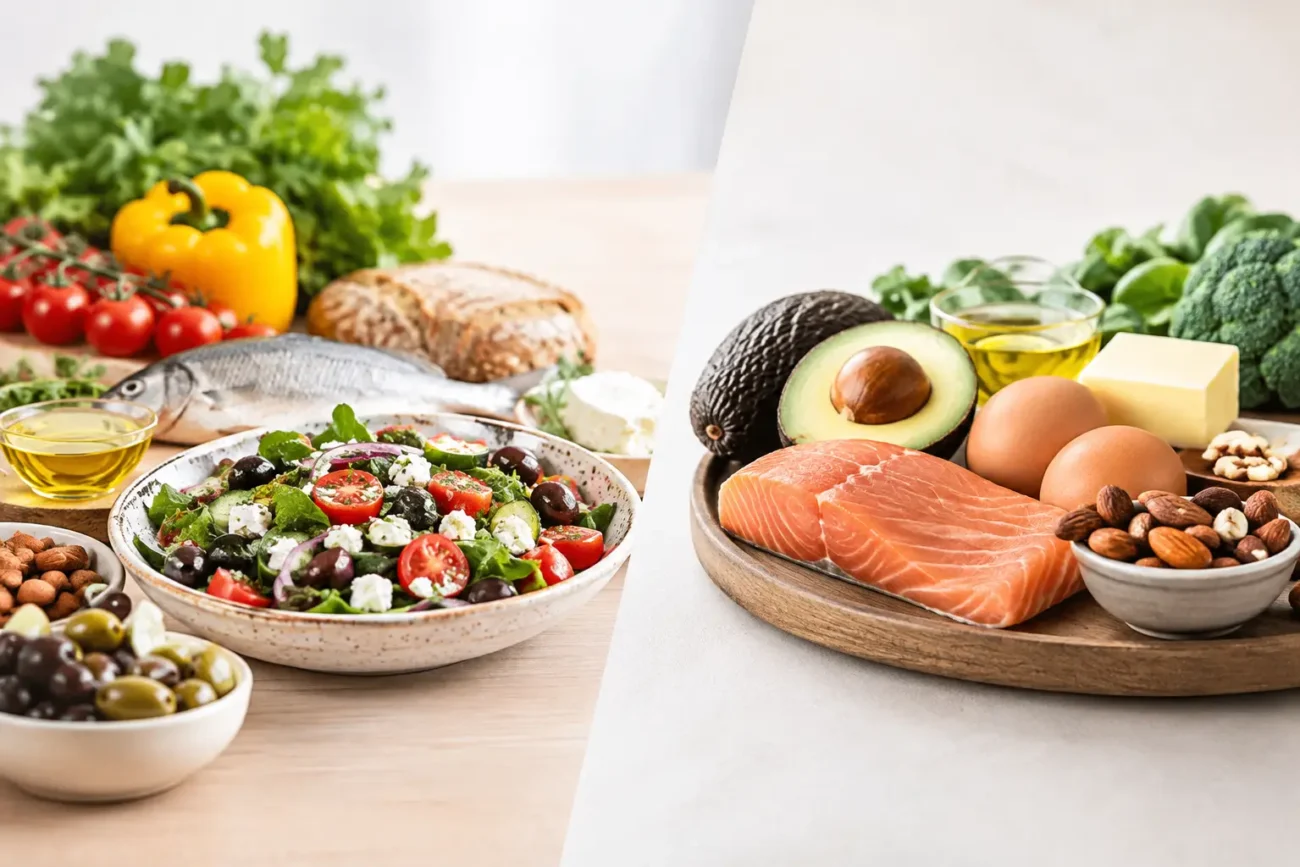
A diet that works on paper but makes dinner, travel, or family meals feel stressful rarely works for long. In the Mediterranean diet versus keto debate, the better choice is not always the one that promises the fastest change on the scale. It is the pattern that supports your health markers, energy, strength, and everyday life well enough to continue.
Both approaches can help some people lose weight and improve blood sugar. But they take very different routes there. For adults in midlife, when cholesterol, blood pressure, muscle mass, sleep, and hormonal changes may all deserve attention at once, those differences matter.
Mediterranean Diet Versus Keto: The Core Difference
The Mediterranean diet is a flexible eating pattern modeled on traditional foods common in parts of Greece, Italy, and other Mediterranean regions. It emphasizes vegetables, fruit, beans, whole grains, nuts, seeds, olive oil, fish, and herbs. Eggs, yogurt, cheese, and poultry can fit in moderate amounts, while red and processed meats, refined grains, sweets, and heavily processed foods are less central.
Keto, short for ketogenic diet, sharply restricts carbohydrates so the body shifts into ketosis, a metabolic state in which it uses fat-derived ketones for much of its fuel. A classic keto plan often limits carbohydrates to roughly 20 to 50 grams per day. That generally means avoiding or tightly limiting bread, rice, pasta, potatoes, most fruit, beans, and many snack foods.
Neither is automatically “clean” or “unhealthy.” A keto diet can include fish, olive oil, non-starchy vegetables, nuts, and avocado. A Mediterranean pattern can include pastries and large portions if it is interpreted loosely. Still, the usual versions of these diets have distinct strengths and limitations.
Heart Health: Where the Mediterranean Pattern Has an Edge
The Mediterranean diet has one of the strongest and longest-standing evidence bases of any dietary pattern for cardiovascular health. Research consistently links it with lower risk of heart disease and stroke, particularly when it is rich in plants, fiber, fish, and unsaturated fats such as extra-virgin olive oil.
Its benefits make practical sense. Beans, oats, vegetables, fruit, and whole grains supply soluble and insoluble fiber, which supports digestion and can help lower LDL cholesterol. Nuts, olive oil, and fish provide predominantly unsaturated fats. The pattern also naturally encourages potassium-rich foods that can support healthy blood pressure.
Keto may improve some heart-related markers, especially triglycerides, and weight loss alone can help blood pressure and blood sugar. HDL cholesterol sometimes rises as well. The more complicated question is LDL cholesterol. Some people see little change or even a reduction, while others experience a substantial increase, particularly when their keto diet is heavy in butter, fatty red meat, coconut oil, cream, and processed low-carb foods.
That variation is worth taking seriously. If you have elevated LDL cholesterol, known heart disease, a strong family history of early heart disease, or a genetic cholesterol condition, a high-saturated-fat version of keto is not a casual experiment. A clinician can help you interpret your full lipid picture and decide whether keto makes sense for you.
Weight Loss: Fast Results Versus Staying Power
Keto often produces quick weight loss during the first week or two. Some of that is water weight: when carbohydrate stores are depleted, the body releases water stored alongside them. Appetite may also decrease for some people because keto meals can be filling and because ketosis may reduce hunger.
That early momentum can be motivating. For someone who feels stuck in a cycle of grazing on sweets, crackers, and refined carbs, a clear boundary around those foods may make eating feel simpler for a while.
Over longer periods, though, research generally finds that the advantage of very-low-carb diets over other calorie-controlled approaches tends to narrow. The key issue is adherence. If you love beans, fruit, oatmeal, or sharing pasta with your family and feel deprived without them, keto may become difficult to sustain. Regaining weight after returning to previous habits is common with any overly restrictive plan.
Mediterranean eating usually produces slower, less dramatic changes, but it can be easier to live with for years. It is not a license to eat unlimited olive oil, cheese, or nuts, which are nutritious but calorie-dense. Still, its range of foods can make it easier to build satisfying meals without feeling socially isolated or overly vigilant.
Blood Sugar and Energy: Keto Can Be Useful, but Context Matters
Because keto severely limits carbohydrate intake, it can lower blood glucose and reduce the need for insulin in some people with type 2 diabetes. Mediterranean-style eating can also improve blood sugar, particularly when meals prioritize vegetables, legumes, minimally processed whole grains, protein, and healthy fats instead of refined carbohydrates.
The difference is degree. Keto aims to keep glucose exposure very low. Mediterranean eating aims to improve the quality, amount, and context of carbohydrates rather than eliminate them.
For many people, a Mediterranean pattern offers steadier energy without the strictness of ketosis: Greek yogurt with berries and nuts at breakfast, a lentil salad with vegetables and olive oil at lunch, or salmon with roasted vegetables and a modest portion of farro at dinner. Pairing carbohydrates with protein, fiber, and fat can blunt sharp blood sugar rises while still providing dietary variety.
If you take insulin or medications that can cause low blood sugar, do not start keto without medical guidance. Carbohydrate restriction may require medication changes. People taking SGLT2 inhibitor diabetes medications should be especially cautious, as ketogenic diets can raise the risk of a rare but serious condition called euglycemic diabetic ketoacidosis.
Muscle, Bone, and Midlife Nutrition
After 40, preserving muscle becomes increasingly important for mobility, metabolism, bone protection, and independence. Both diets can provide adequate protein, but keto does not automatically do so. A plate dominated by fats such as cheese, oils, and cream may leave too little room for protein-rich foods.
The Mediterranean pattern can make protein distribution easier across the day through fish, eggs, dairy, poultry, tofu, and beans. It also includes carbohydrate-containing foods that can support exercise performance and recovery, especially for people who walk briskly, cycle, lift weights, or do higher-intensity training.
Keto is not necessarily incompatible with strength training, but adaptation can take time, and some people notice reduced energy for intense exercise. If your goal is to rebuild muscle after menopause, illness, inactivity, or a busy stretch of life, adequate total calories, protein, resistance training, and sleep matter more than chasing ketosis.
Fiber deserves attention, too. Constipation is a common keto complaint, especially when vegetables, seeds, and fluids are neglected. A well-planned keto diet can include fiber from leafy greens, broccoli, chia, flax, and nuts, but the Mediterranean approach makes meeting fiber needs considerably more natural.
Which Diet Is More Realistic for You?
A Mediterranean approach is often the better default for long-term health because it is flexible, nutrient-dense, socially workable, and strongly supported for heart health. It also leaves room for cultural food traditions, restaurant meals, and the occasional dessert without making you feel that you have failed.
Keto may be worth considering if you have struggled with appetite regulation or blood sugar swings and genuinely prefer a lower-carb way of eating. If you choose it, the quality of fats matters. Build meals around olive oil, avocado, olives, nuts, seeds, fish, eggs, poultry, and plenty of non-starchy vegetables rather than relying on bacon, butter coffee, and packaged keto treats.
There is also a useful middle ground: Mediterranean-style, lower-carb eating. You might reduce sugary drinks, sweets, white bread, and oversized portions of refined starches while keeping berries, beans, plain yogurt, and modest servings of whole grains. This approach often delivers better blood sugar control without the all-or-nothing rules of keto.
A Better Question Than “Which Diet Wins?”
Instead of asking which plan is best in the abstract, ask what you need most right now. If your LDL cholesterol is high, your family has a history of heart disease, or you want a sustainable framework for aging well, Mediterranean eating is a sensible place to start. If blood sugar management or relentless hunger is your central issue, a carefully planned lower-carb approach may help, ideally with professional support if you use medication or have a health condition.
The most helpful diet is rarely the strictest one. It is the one that helps you feel nourished, keeps your health markers moving in the right direction, and still lets food remain a satisfying part of your life.
