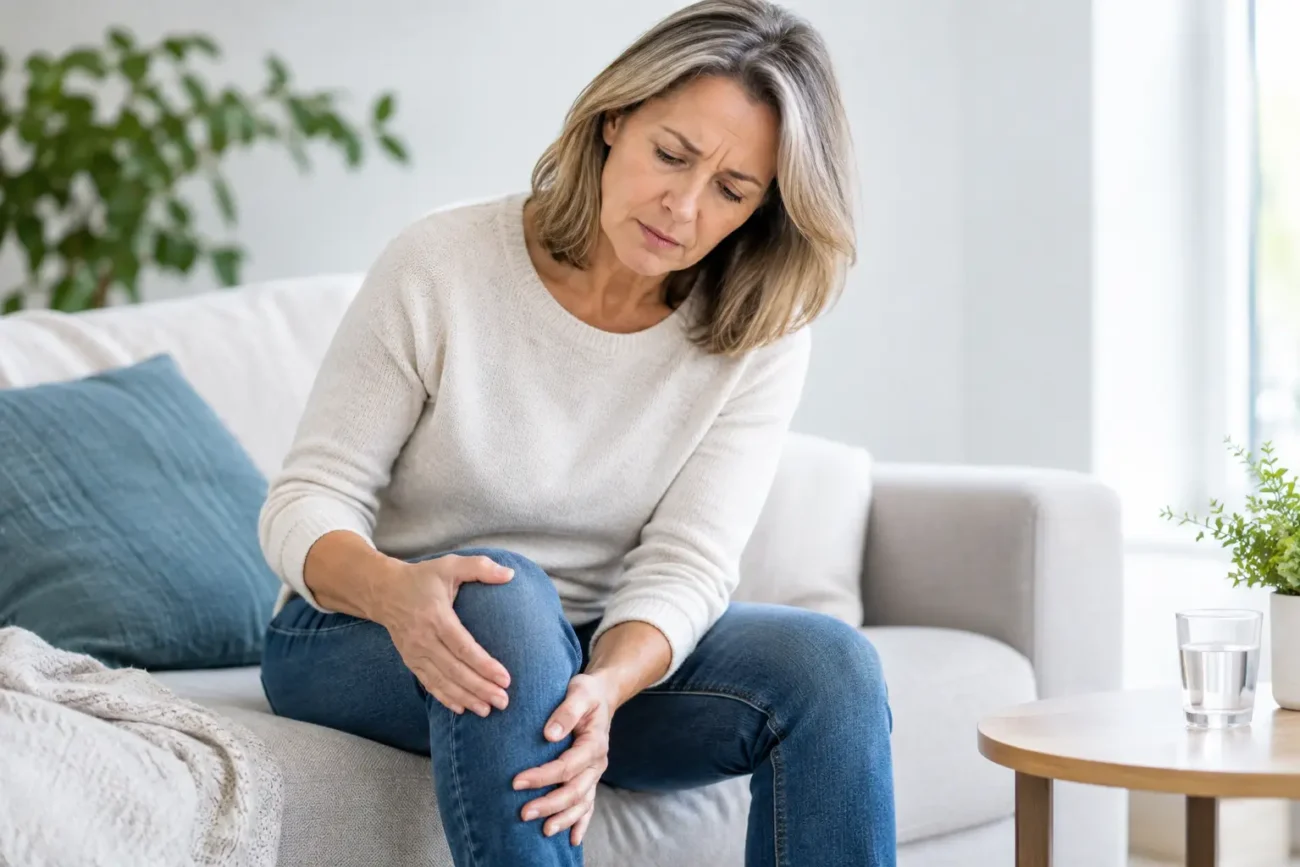
That new stiffness when you get out of bed, the sore knees after a familiar walk, or fingers that suddenly feel puffy can be unsettling. Can menopause cause joint pain? Yes, it can contribute – but it is rarely the only possible explanation, and persistent pain deserves a thoughtful look rather than a shrug.
Many women notice joint aches during perimenopause, the years leading up to the final menstrual period, or after menopause. The experience is common enough that clinicians hear about it often, yet it can be overlooked because hot flashes and sleep changes tend to get more attention. Understanding the connection can help you choose sensible next steps without assuming every ache is simply something you have to tolerate.
Can Menopause Cause Joint Pain?
Menopause is associated with joint pain and stiffness, particularly in the hands, knees, hips, shoulders, and lower back. Estrogen receptors are found in tissues throughout the body, including cartilage, bone, muscles, and the lining of joints. As estrogen levels fluctuate in perimenopause and then settle at a lower level after menopause, some people may become more sensitive to pain or notice changes in how their joints feel.
The science is still evolving. Estrogen does not act like a single on-off switch for joint health, and research cannot say that menopause directly causes every new sore knee or aching knuckle. But the timing is meaningful: many women report musculoskeletal symptoms around the menopausal transition, and experts recognize hormonal change as one factor that may influence inflammation, connective tissue, and pain perception.
Sleep is another important part of the picture. Night sweats, insomnia, and frequent waking can lower your pain threshold and make ordinary discomfort feel more intense. Less sleep can also make it harder to maintain the movement habits that keep joints and muscles comfortable. Stress, mood changes, and fatigue can add to that cycle.
Why the aches can feel surprisingly widespread
Joint discomfort in midlife is often not limited to one obvious injury. You might feel stiff after sitting, ache at the end of the day, or find that your hands complain during tasks that never used to bother you. Some women also notice tendon-related pain, such as heel pain or sore elbows, rather than pain deep inside a joint.
At the same time, midlife brings other changes that can overlap with menopause. Muscle mass naturally becomes harder to maintain, especially if activity has dropped off. A small loss of strength around the hips or knees can change how force travels through a joint. Weight changes, old sports injuries, long hours at a desk, and osteoarthritis can all matter too.
What Menopause-Related Joint Pain Usually Feels Like
There is no single menopause pain pattern. Still, people commonly describe morning stiffness that eases with gentle movement, aching after activity, or a general sense of creakiness. Hand and finger stiffness can be especially noticeable, sometimes alongside changes in grip strength.
Symptoms may wax and wane with perimenopausal hormone shifts. A difficult week of poor sleep, high stress, or less movement can make them more apparent. After menopause, some people improve, while others continue to have symptoms that are better explained by arthritis, tendon problems, or another condition.
Pain that is clearly linked to a single event – a twist, fall, or sudden increase in training – is more likely to be an injury than a hormone-related symptom. That distinction matters because rest alone is not always the right answer, and neither is pushing through significant pain.
Other Causes Worth Considering
It is easy to blame menopause when symptoms arrive around the same time, but a few conditions are important to rule out. Osteoarthritis becomes more common with age and can affect the knees, hips, hands, and spine. It often causes pain with use and brief stiffness after rest.
Inflammatory arthritis, including rheumatoid arthritis, is less common but needs medical assessment. It may cause swollen, warm joints; prolonged morning stiffness; fatigue; or symmetrical pain in small joints of the hands and feet. Thyroid disorders, low vitamin D, medication side effects, and autoimmune conditions can also contribute to muscle or joint symptoms.
Seek prompt medical care for a hot, red, very swollen joint; fever; inability to bear weight; sudden severe pain; or pain after a significant injury. Make a routine appointment if discomfort lasts for several weeks, interferes with sleep or daily activities, or comes with unexplained weight loss, rash, marked fatigue, or persistent swelling.
What Can Help Aching Joints in Midlife
The most useful approach is usually steady and unglamorous: support the joint, strengthen the muscles around it, and address the factors that turn discomfort up. You do not need punishing workouts to get benefits. In fact, abrupt changes in exercise can aggravate tendons and joints that are already irritated.
Keep moving, but choose the right dose
Regular movement helps lubricate joints, maintain range of motion, and preserve strength. Walking, cycling, swimming, water exercise, and low-impact dance can all be good choices. If your knees or hips ache, shorter, more frequent sessions may feel better than one long outing.
Strength training is particularly valuable in midlife. Building the muscles around the hips, thighs, back, and shoulders can reduce strain on joints and support bone health. Start with body-weight movements, resistance bands, machines, or light weights, focusing on controlled form. If a joint is painful, a physical therapist can help tailor exercises rather than asking you to stop moving altogether.
A little stiffness during the first few minutes of activity is common. Sharp pain, increasing pain, swelling, or pain that lingers substantially worse the next day is a sign to scale back and get guidance.
Make sleep and recovery part of the plan
Joint care is not only about exercise. If hot flashes or insomnia are leaving you exhausted, treating those symptoms may indirectly improve how your body feels during the day. Keep your bedroom cool, use breathable bedding, and follow a consistent sleep schedule where possible. If sleep disruption is persistent, bring it up at a menopause or primary care visit. It is a legitimate health concern, not a minor inconvenience.
Heat can ease stiffness for many people: think a warm shower, heating pad, or gentle warm-up before activity. Cold packs may help after a flare or when a joint feels swollen. Use whichever feels better, with a cloth between the pack and your skin.
Support basics without chasing miracle fixes
A balanced eating pattern with enough protein, fruits and vegetables, fiber-rich carbohydrates, and healthy fats supports muscle, bone, and overall health. Calcium and vitamin D are important for bone health, although the right amount depends on your diet, medical history, and lab results. A clinician can help if you are concerned about deficiency.
Supplements marketed for joint pain are not a guaranteed answer. Evidence for products such as glucosamine, collagen, turmeric, and omega-3s varies by product and condition, and quality can differ widely. Some interact with medications. Before spending heavily on a supplement stack, discuss it with a pharmacist or clinician – especially if you take blood thinners, have liver or kidney disease, or are preparing for surgery.
Over-the-counter pain relievers may provide short-term relief for some people, but they are not risk-free. Anti-inflammatory medicines can affect the stomach, kidneys, blood pressure, and heart risk, while acetaminophen has liver-related limits. Ask a clinician which option, if any, is appropriate for you and how often you can use it.
Could Menopause Treatment Help?
Menopausal hormone therapy is primarily used for bothersome hot flashes and night sweats, along with certain other menopause symptoms. Some women find that their overall aches improve when their sleep and vasomotor symptoms improve, but hormone therapy is not prescribed solely as a universal treatment for joint pain.
Whether it is a reasonable option depends on your age, time since menopause, symptoms, personal history, and risks such as blood clots, stroke, certain cancers, or liver disease. A clinician who routinely discusses menopause can help weigh the benefits and risks in your situation. Nonhormonal treatments for hot flashes and targeted treatment for arthritis or tendon pain may be better choices for some people.
Keeping a simple symptom note for two or three weeks can make that conversation more useful. Record where pain occurs, how long morning stiffness lasts, whether joints swell, what activity you did, how you slept, and where you are in the menopausal transition. Patterns often become clearer on paper than they are in memory.
You are not being overly sensitive if your body feels different during menopause. Joint pain can be part of this transition, but it is also a useful invitation to check in on strength, sleep, and any symptoms that deserve a closer medical look. Small, consistent adjustments and the right support can make midlife movement feel like yours again.
