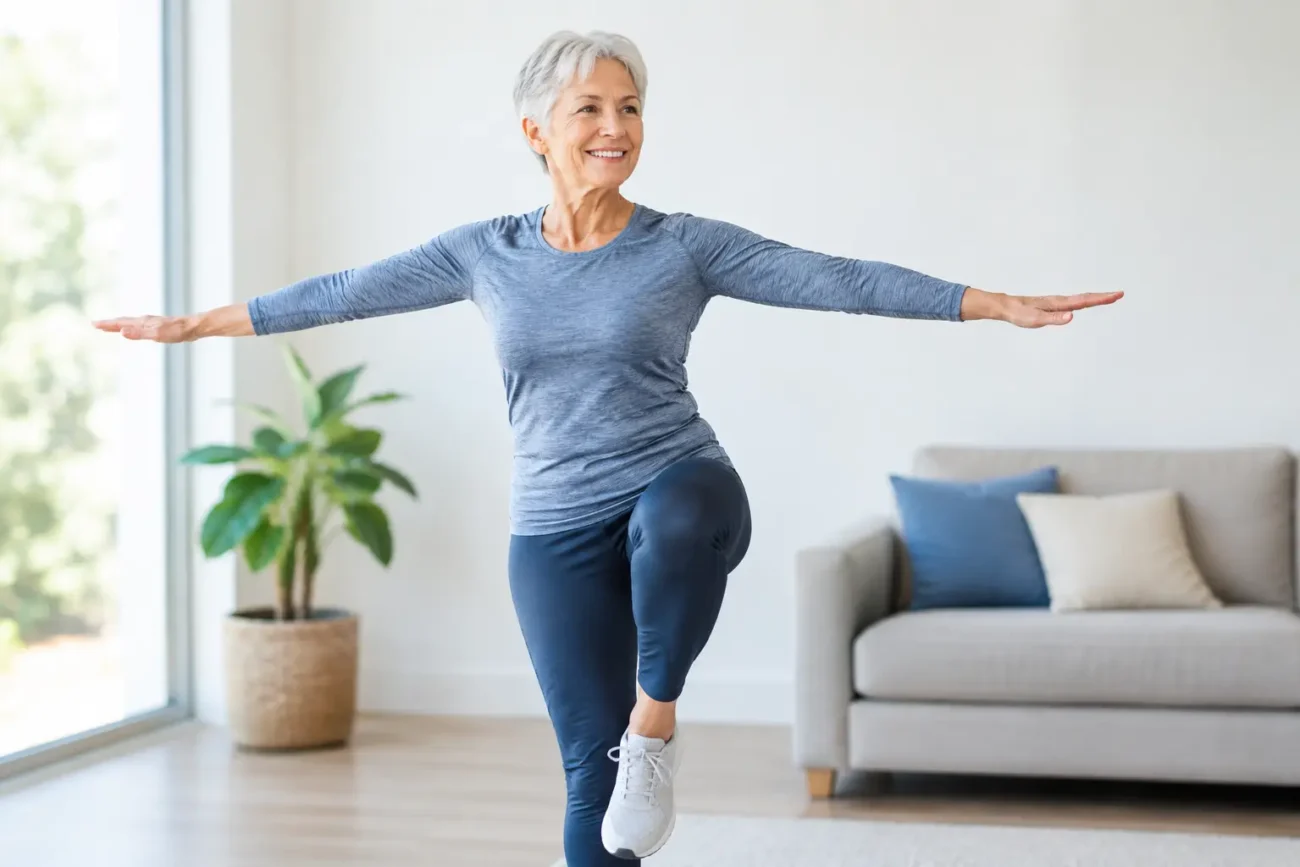
A brief wobble when you turn quickly, step off a curb, or put on pants standing up can feel unsettling. The good news is that many people can improve balance after 60 with regular, targeted practice – and without treating normal aging as a reason to stop moving.
Balance is not one ability that you either have or lose. It is a skill your brain and body continually coordinate using vision, inner-ear signals, joint sensation, muscle strength, and reaction time. Some changes with age are expected, but balance often responds well to training, especially when you work on the specific pieces that support it.
Why balance can change after 60
Standing upright looks simple, but it requires constant small adjustments. Your feet and ankles send information about the surface beneath you. Your eyes tell you where you are in space. The vestibular system in the inner ear helps detect head movement. Your brain combines those signals and tells your muscles how to respond.
With age, a few parts of this system can become less efficient. Leg strength and muscle power may decline if you are less active. Stiffer ankles or hips can make it harder to correct a small sway. Vision changes, arthritis, neuropathy, certain medications, poor sleep, and alcohol can all affect steadiness too.
That does not mean every balance change is simply “getting older.” A new or rapidly worsening problem deserves attention, particularly if it comes with dizziness, numbness, weakness, fainting, headaches, changes in speech, or a recent fall. Your clinician can help identify whether an underlying condition, medication, hearing or vision issue, or inner-ear problem needs treatment.
Start by making practice safe
Balance work should be challenging enough that you notice your body making adjustments, but not so challenging that a fall is possible. Begin near a sturdy kitchen counter, heavy table, or railing. Wear supportive shoes with secure soles, rather than slippery socks or loose slippers.
If you have fallen recently, use a cane or walker, have severe osteoporosis, experience frequent dizziness, or have a neurologic condition, it is wise to ask a physical therapist or health professional for individualized guidance first. The right plan may still include balance exercises, but the setup and progression matter.
A simple rule is to keep one or two fingers lightly touching a stable surface when you are learning a new move. Avoid grabbing furniture that can slide, such as a lightweight chair. As you feel more secure, reduce the amount of hand support rather than rushing into harder positions.
The most effective ways to improve balance after 60
The best routine combines balance practice with strength, walking or other aerobic activity, and enough challenge to keep improving. A few minutes most days generally works better than an ambitious session once in a while.
Train single-leg stability, gradually
Being able to briefly stand on one leg helps with everyday actions such as stepping over a puddle, climbing stairs, and getting dressed. Stand beside the counter with both hands available. Shift your weight onto one foot, then lift the other foot just an inch or two from the floor.
Hold for several seconds while breathing normally, then switch sides. Repeat a few times. At first, keep a fingertip on the counter. Later, try using less hand pressure, holding a little longer, or slowly turning your head from side to side. Do not close your eyes for this exercise unless a qualified professional has advised it and your environment is exceptionally safe.
Practice weight shifts and controlled movement
Many falls happen during movement, not while standing still. Weight-shift exercises teach your body to move its center of gravity with control. With your hands near the counter, shift gently from one foot to the other, then forward toward your toes and backward toward your heels without lifting your feet.
You can also try a heel-to-toe walk along a counter: place one foot directly in front of the other, pause, and take the next step. A wider stance is completely appropriate in the beginning. The goal is smooth, deliberate walking, not performing a circus trick.
Tai chi is another well-supported option for many older adults. Its slow changes in direction, upright posture, and attention to weight transfer make it a practical form of balance training. A beginner class designed for older adults can be particularly helpful if you prefer structured instruction and social accountability.
Strengthen the legs, hips, and ankles
Balance practice alone is useful, but muscles need enough strength to make a quick correction when you trip or turn. The hips, thighs, calves, and ankles are especially important.
Sit-to-stands are a good starting point. From a firm chair, place your feet beneath your knees, lean forward slightly, and stand up without using your hands if you can do so safely. Sit down slowly and repeat. This strengthens the thighs and builds confidence with a movement you use every day.
Calf raises are equally practical. Hold the counter, rise onto the balls of your feet, pause, and lower with control. For hip strength, try standing side leg lifts: keep your torso tall, move one leg slightly out to the side without leaning, then return. Two or three strength sessions per week can make daily movement feel noticeably more secure over time.
If you already do resistance training, consider whether your program includes squats or sit-to-stands, step-ups, calf raises, and hip exercises. Heavier resistance can be appropriate for many adults over 60, but form, joint comfort, and your medical history should guide the load.
Keep walking, but vary the challenge
Walking supports leg strength, cardiovascular fitness, coordination, and confidence. A flat, predictable route is a sensible place to begin if you feel unsteady. As your ability improves, add mild variety: a gentle hill, grass or a well-maintained trail, or a route that includes a few safe curbs.
The trade-off is clear: uneven surfaces can build real-world skill, but they also increase risk. Choose daylight, good footwear, and a route you know. If you have concerns, walk with a companion or use trekking poles after learning how to use them properly.
Look beyond exercise: the overlooked contributors
A strong balance routine can be undermined by something as basic as outdated eyeglasses or a medication side effect. Review your prescriptions and over-the-counter medications with your pharmacist or clinician, especially if you take drugs for sleep, anxiety, allergies, blood pressure, or pain. Do not stop a prescribed medicine on your own, but do mention dizziness, grogginess, or feeling faint when standing.
Vision and hearing checks matter too. Your brain relies on reliable sensory input to orient you, particularly in dim restaurants, on stairs, or on unfamiliar ground. If you have diabetes, numbness or tingling in the feet should also be discussed promptly, since reduced sensation can affect how you detect the ground beneath you.
At home, practical fall prevention is not an admission of frailty. Improve lighting on stairs and hallways, secure loose rugs or remove them, clear cords from walking paths, and use a nonslip mat in the bathroom. Keep frequently used items within easy reach so you are not climbing on a chair in socks.
A realistic weekly routine
Consistency beats complexity. On most days, spend five to 10 minutes on supported single-leg stands, weight shifts, and heel-to-toe walking. Add strength work two or three days a week, and keep up regular walking, cycling, swimming, or another activity you enjoy.
Progress one variable at a time. You might reduce hand support before increasing the hold time, or add a few more sit-to-stands before choosing a lower chair. Mild muscle fatigue is normal after strength work; sharp joint pain, chest pain, severe shortness of breath, or dizziness is not.
When to get professional help
Make an appointment if balance problems are new, worsening, or interfering with everyday activities. Seek urgent care for sudden trouble walking, one-sided weakness or numbness, facial drooping, confusion, severe headache, fainting, or new speech or vision changes.
For ongoing concerns, a physical therapist can assess gait, leg strength, footwear, vestibular function, and the specific situations that make you unsteady. That individualized approach is especially valuable after a fall or when arthritis, Parkinson’s disease, diabetes, stroke, or inner-ear symptoms are part of the picture.
The aim is not perfect stillness. It is the ability to recover, adapt, and keep doing the things that make your life feel like yours – walking with friends, traveling, carrying groceries, playing with grandchildren, or simply moving through your home with less hesitation.
