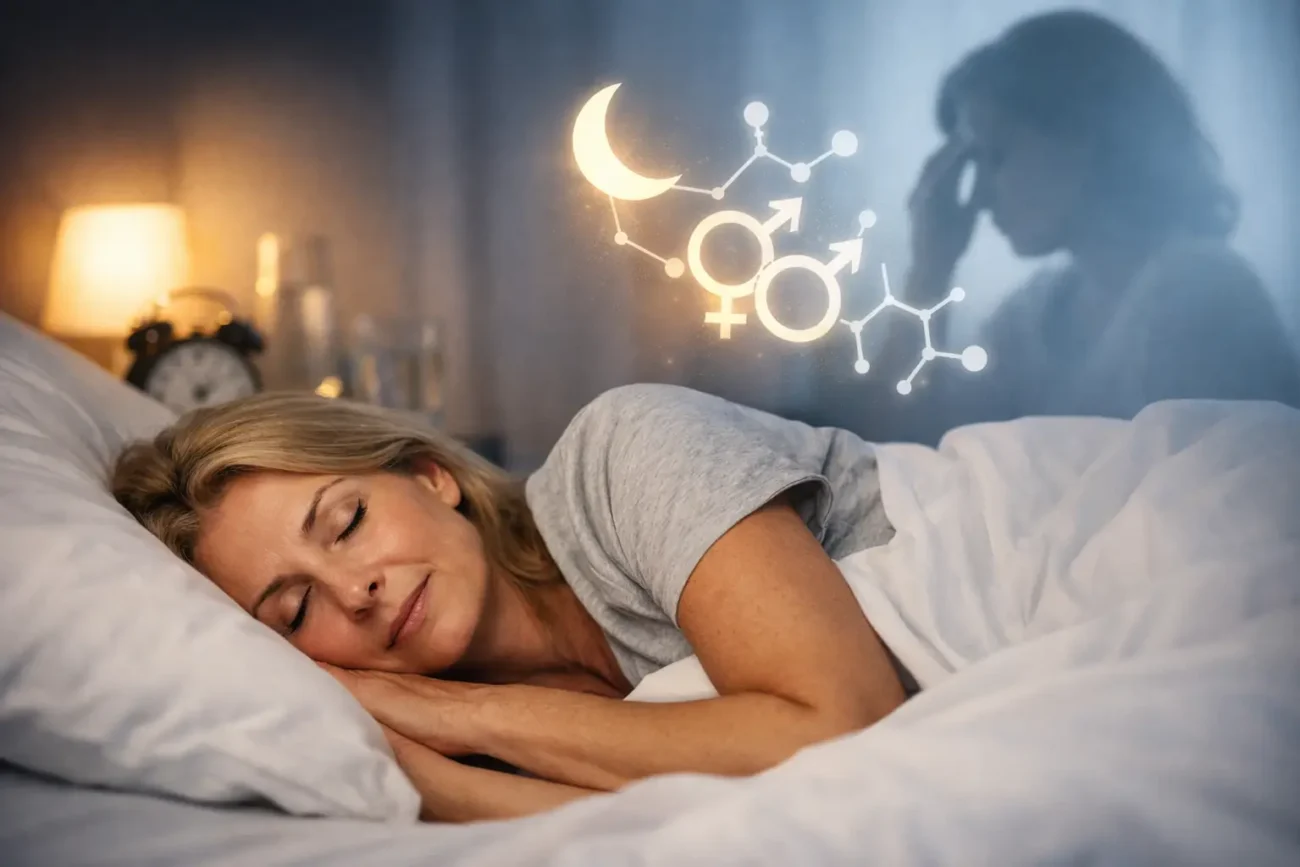
Waking at 3 a.m. when you once slept through the night can feel baffling, especially if your routines have not changed much. Sleep quality and hormonal changes in midlife are closely connected, and the shift is not simply a matter of getting older or failing to practice good sleep habits.
For many people, midlife brings a new kind of tiredness: sleep that is lighter, more easily interrupted, or no longer restorative. Perimenopause and menopause are common reasons for this pattern in women, while men may notice gradual changes in sleep alongside shifts in testosterone, body composition, stress, and health conditions. The details differ from person to person, but the core issue is often the same: hormones influence the systems that regulate temperature, mood, breathing, and the internal clock that helps us sleep.
Why Sleep Quality and Hormonal Changes in Midlife Intersect
Sleep is not a passive state. Throughout the night, the brain coordinates body temperature, stress hormones, appetite signals, immune activity, and tissue repair. Sex hormones, including estrogen, progesterone, and testosterone, affect several of these processes. When their levels fluctuate or decline, sleep may become more fragile.
In perimenopause, estrogen can rise and fall unpredictably before it settles at a lower level after menopause. Those swings may contribute to hot flashes and night sweats, which can wake someone directly or make it difficult to fall back asleep. Lower estrogen may also affect mood and joint comfort, two less obvious reasons sleep can suffer.
Progesterone has a calming effect for some people and may support sleepiness. As ovulation becomes less regular during perimenopause, progesterone levels often fall. That does not mean every poor night is caused by progesterone, but it helps explain why a familiar bedtime routine may suddenly seem less effective.
For men, testosterone generally declines gradually rather than shifting sharply. Low testosterone can be associated with lower energy, mood changes, and reduced muscle mass, all of which may affect sleep and daily activity. But it is rarely useful to assume testosterone is the answer to every midlife sleep complaint. Poor sleep itself can lower morning testosterone, and conditions such as sleep apnea can create the same symptoms.
The temperature problem is real
A hot flash can last only a few minutes, yet its effect on the night can linger. The sudden warmth, sweating, faster heartbeat, and urge to throw off the covers may fully wake the brain. Even if you do not remember each episode, repeated temperature changes can reduce deep, restorative sleep.
A cooler bedroom can help, but it is not a cure for frequent or severe night sweats. Breathable bedding, layered sleepwear, and a bedside change of clothes can make episodes less disruptive. Alcohol, spicy meals, and a warm room trigger symptoms for some people, though not everyone has the same pattern.
Stress hormones can keep the cycle going
Midlife often includes real pressures: demanding work, aging parents, changing family roles, financial decisions, and health concerns. Cortisol, commonly called the stress hormone, naturally follows a daily rhythm. It should be lower at night and rise toward morning. Persistent stress, irregular sleep schedules, and chronic sleep loss can interfere with that rhythm.
The result can be a frustrating loop. Hormonal symptoms disturb sleep; poor sleep makes stress feel more intense; a more activated nervous system then makes the next night harder. This is not a personal failure. It is a useful reason to address both the physical and behavioral pieces of sleep rather than chasing one perfect solution.
What Midlife Sleep Changes Are Common, and What Deserve Attention
Some change in sleep architecture is normal with age. People tend to spend less time in deep sleep and may wake more easily from noise, light, pain, or a full bladder. But “common” does not mean you should resign yourself to exhaustion.
Consider speaking with a clinician if sleep problems last several weeks, interfere with daytime functioning, or occur with significant mood changes. Frequent loud snoring, gasping, witnessed pauses in breathing, morning headaches, or falling asleep unintentionally during the day deserve particular attention. Obstructive sleep apnea becomes more common in midlife, including after menopause, and it is often missed in women because symptoms may show up as insomnia, fatigue, anxiety, or headaches rather than obvious snoring.
Also mention new palpitations, severe sweating, unexplained weight change, restless legs, persistent pain, reflux, or medication changes. Thyroid disorders, depression, anxiety, iron deficiency, and some medications can all affect sleep. A thoughtful evaluation is more helpful than assuming hormones are the sole cause.
Practical Ways to Support Better Sleep
The basic advice to keep a regular schedule still matters, but midlife sleep often benefits from a more tailored approach. Start by noticing your own pattern for two weeks. Track bedtime, wake time, awakenings, alcohol, caffeine, exercise, night sweats, and how you feel the next day. The goal is not to micromanage sleep. It is to spot connections that are otherwise easy to miss.
Keep the wake-up time relatively consistent, including weekends. A steady morning wake time anchors the body clock more effectively than trying to force an early bedtime after a bad night. Get outdoor light early in the day when possible, and make the hour before bed quieter and dimmer. Screens are not automatically disastrous, but bright, engaging content can make it harder for a wired brain to settle.
Caffeine is another area where timing matters more than moral rules. Some people can have coffee at noon without consequence; others find that even a late-morning cup affects sleep. If you are waking often, try moving caffeine earlier for a couple of weeks before deciding it is not relevant. Alcohol can make falling asleep easier while increasing awakenings later in the night, especially when hot flashes are already an issue.
Regular movement supports sleep, mood, bone health, and insulin sensitivity. Strength training is especially valuable in midlife because it helps preserve muscle and function as hormone levels change. Most people do not need punishing workouts to sleep better. Consistent walking, resistance training, and aerobic activity that feels sustainable are often more useful than an intense program that leaves you overstimulated or sore at bedtime.
If you spend long stretches awake in bed, a technique from cognitive behavioral therapy for insomnia can help: get up, keep the lights low, and do something calm until you feel sleepy again. This gradually rebuilds the mental association between bed and sleep rather than bed and frustrated clock-watching. Cognitive behavioral therapy for insomnia is widely considered a first-line treatment for chronic insomnia and can be effective even when hormonal changes are part of the picture.
Where Treatment Options Fit In
Lifestyle changes are worthwhile, but they are not a test of character and they are not always enough. If vasomotor symptoms, meaning hot flashes and night sweats, are disrupting your life, discuss treatment with a clinician who understands menopause care. Menopausal hormone therapy can be an appropriate and effective option for some people, depending on age, symptoms, health history, and timing. It is not right for everyone, so the decision should be individualized.
Nonhormonal prescription options are also available for some people with hot flashes. If depression, anxiety, pain, reflux, or another condition is contributing to insomnia, treating that condition may improve sleep more than adding another sleep aid. Over-the-counter sleep products can seem harmless, but regular use may bring next-day grogginess, tolerance, drug interactions, or other concerns. Ask a pharmacist or clinician before making them a nightly habit.
For men who are concerned about testosterone, testing and treatment should begin with a full conversation about symptoms, repeated morning lab results when appropriate, medications, sleep, and conditions such as sleep apnea. Testosterone therapy is medical treatment, not a general energy supplement, and it requires follow-up.
Give Yourself a More Useful Goal
The goal is not necessarily eight uninterrupted hours every night. A better goal is sleep that leaves you reasonably alert, emotionally steady, and able to enjoy your days most of the time. Some nights will still be imperfect, particularly during periods of hormonal transition.
If your sleep has changed, take it seriously without treating it as a verdict on your health or age. A few targeted adjustments, a symptom record, and the right medical conversation can turn a nightly struggle into a manageable part of midlife.

15 thoughts on “Sleep Quality and Hormonal Changes in Midlife”