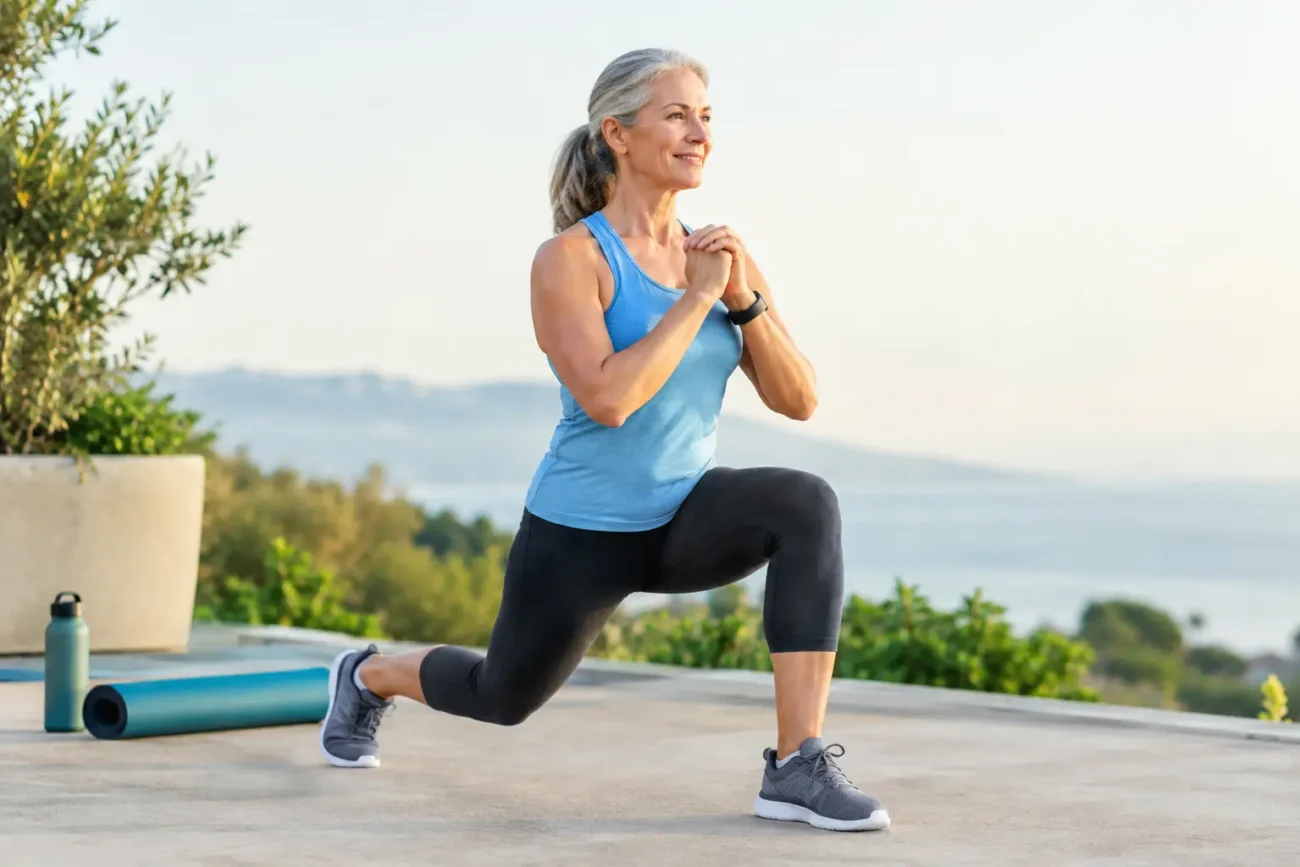
A bone-density scan showing osteopenia can make exercise feel suddenly more complicated. The encouraging news is that the best exercises for osteopenia are not exotic or punishing. They are regular, progressive activities that ask your bones and muscles to do useful work – while respecting your current fitness, joint health, and fracture risk.
Osteopenia means bone density is lower than average but not low enough to meet the definition of osteoporosis. It is a reason to take bone health seriously, not a verdict that you need to avoid movement. In fact, staying inactive can accelerate the losses you are trying to prevent. The right routine can support bone strength, muscle mass, balance, and the confidence to keep doing the things you enjoy.
Why exercise helps bones
Bone is living tissue that responds to mechanical stress. When you bear weight through your legs, pull against resistance, or experience a safe amount of impact, your body receives a signal to maintain or build bone. Muscles matter here, too: a stronger muscle pull places healthy stress on the bone it attaches to.
That does not mean harder is always better. Walking, strength training, and balance work each contribute something different. The most effective plan is usually one you can repeat week after week and gradually make more challenging. If you have osteoporosis, a history of fractures, significant back pain, dizziness, or have been told you have spinal compression fractures, get individualized guidance from your clinician or a physical therapist before starting an impact-based program.
The best exercises for osteopenia
1. Brisk walking and purposeful hills
Walking is an accessible weight-bearing exercise, meaning your skeleton supports your body weight against gravity. A relaxed stroll is still good for general health, but a purposeful pace does more for your heart, leg muscles, and bones. Think of walking fast enough that conversation is possible but singing would be difficult.
Adding hills, stairs, or intervals can increase the training effect without requiring running. For example, walk normally for a few minutes, then pick up the pace or climb for one minute, and repeat. If you already walk regularly, this kind of progression may be more useful for bone health than simply extending the same easy route.
Walking alone may not be enough to substantially improve bone density in every person, especially at the hip and spine. It works best as one part of a broader routine that includes resistance training.
2. Squats and sit-to-stands
Squats train the hips, thighs, and trunk while loading the bones of the legs and pelvis. You do not need to begin with a deep barbell squat. Standing up from a sturdy chair and sitting down slowly is a very practical starting point, particularly if you are returning to exercise or managing knee discomfort.
Keep your feet about hip-width apart, hinge slightly at the hips, and let your knees track in the same direction as your toes. Use your hands lightly on the chair or countertop if needed. As this gets easier, lower the chair height, hold a dumbbell close to your chest, or move toward a body-weight squat.
The goal is not flawless form for social media. It is gradually improving the strength that makes stairs, getting out of a car, and carrying groceries feel more secure.
3. Step-ups and stair climbing
Step-ups are a simple way to load one leg at a time, which is valuable because each hip and leg must support the body independently. Step onto a low, stable platform or the bottom stair, press through the whole foot, then step back down with control. Hold a railing or countertop at first if balance is a concern.
Start with a low step. Higher is not automatically better, especially if it causes knee pain or forces you to push off heavily with the trailing foot. When a low step feels steady, add repetitions, use a slightly higher step, or hold light weights.
Regular stair climbing can serve a similar purpose. It is convenient, but it can be demanding on sore knees or hips, so choose the option that lets you move smoothly and consistently.
4. Deadlifts or hip hinges
A hip hinge strengthens the glutes, hamstrings, and back muscles – key areas for posture, hip stability, and everyday lifting. It also teaches a safer pattern for picking up laundry, gardening supplies, or a suitcase.
Begin by practicing the movement without weight: soften your knees, send your hips backward, keep your spine long, and stand by squeezing your glutes. Once the pattern feels comfortable, a pair of dumbbells or a kettlebell can provide meaningful resistance. Romanian deadlifts, where the weight stays close to the legs as you hinge, are a common option.
If you have ongoing back pain or a prior spinal fracture, ask a physical therapist to assess your technique. The distinction matters: a controlled hip hinge with a neutral spine is different from repeatedly rounding forward through the back.
5. Rows, presses, and pull exercises
Osteopenia is often discussed in terms of hips and spine, but upper-body strength deserves attention too. Exercises such as dumbbell rows, resistance-band rows, wall or incline push-ups, chest presses, and overhead presses challenge the muscles around the shoulders, arms, and upper back.
Rows are especially helpful for the muscles that support an upright posture. A resistance band anchored securely at chest height can be enough to start. Pull the elbows back without shrugging, pause briefly, and return slowly. For pressing movements, choose a resistance that feels challenging by the final few repetitions while still allowing controlled form.
There is no need to chase maximal lifts. Bone and muscle respond to resistance that is progressively challenging, not to one heroic workout followed by weeks of soreness.
6. Low, controlled impact if it is appropriate for you
Impact is not automatically off-limits with osteopenia. For many people without fractures, severe joint pain, or major balance problems, activities such as gentle hopping, heel drops, dancing, tennis, pickleball, or short bouts of jogging can provide a useful bone-loading stimulus.
The right dose depends on your starting point. A practical entry point might be a few sets of gentle heel raises followed by controlled heel drops, or brief rounds of marching with a slightly firmer foot strike. Build slowly and pay attention to pain in the joints, feet, hips, or back.
Swimming and cycling are excellent for cardiovascular fitness, but they are not weight-bearing, so they should not be your only exercise for osteopenia. Keep them if you enjoy them, then add resistance and weight-bearing activity where your body allows.
7. Balance and posture training
A fall can have more immediate consequences for bone health than a slightly imperfect workout plan. Balance practice helps reduce that risk and is worth treating as a core part of the program, not an optional extra.
Try standing on one leg near a kitchen counter, first with fingertips available for support. You can also practice heel-to-toe walking, side steps, tai chi, or yoga poses that challenge balance without placing you in deep spinal flexion. Aim for a tall, relaxed posture rather than rigidly pulling your shoulders back.
If you feel unsteady, do not test your limits alone in the middle of a room. Use a stable support and make the exercise a little easier. Consistent practice is more valuable than a dramatic balance challenge.
How often should you exercise for osteopenia?
A realistic weekly plan often includes weight-bearing movement on most days, strength training two or three nonconsecutive days a week, and a few minutes of balance practice several times a week. You might walk briskly for 30 minutes on several days, strength train on Tuesday and Friday, and add single-leg balance while waiting for the coffee to brew.
For strength work, begin with one or two sets of roughly 8 to 12 repetitions for each movement. The last few repetitions should feel like work, but your form should not unravel. When you can comfortably exceed that range, increase the resistance a little, add a set, or choose a harder variation.
Progress is personal. Someone with an active exercise background may be ready for heavier resistance and higher-impact activities, while someone recovering from an injury may need chair-based movements and supervised guidance. Both approaches can be sensible starting points.
Movements to approach thoughtfully
Most people with osteopenia do not need a long list of forbidden exercises. Still, caution is wise with repeated, loaded rounding of the spine, forceful twisting, or rapid sit-up-style movements, particularly if you have osteoporosis or known vertebral fractures. Examples include weighted toe touches and deep twisting motions performed quickly or under load.
This is not a reason to become afraid of bending. Everyday life involves bending, reaching, and turning. The aim is to build strength and use good mechanics, rather than repeatedly stressing a vulnerable spine in extreme positions. A clinician or physical therapist can offer more specific advice based on your bone-density results and medical history.
Exercise is one powerful part of caring for your bones, alongside adequate protein, calcium and vitamin D when needed, not smoking, limiting excess alcohol, and following up on recommended bone-density testing. Start with the movement that feels most doable this week, then let consistency – not fear or perfection – carry the plan forward.
