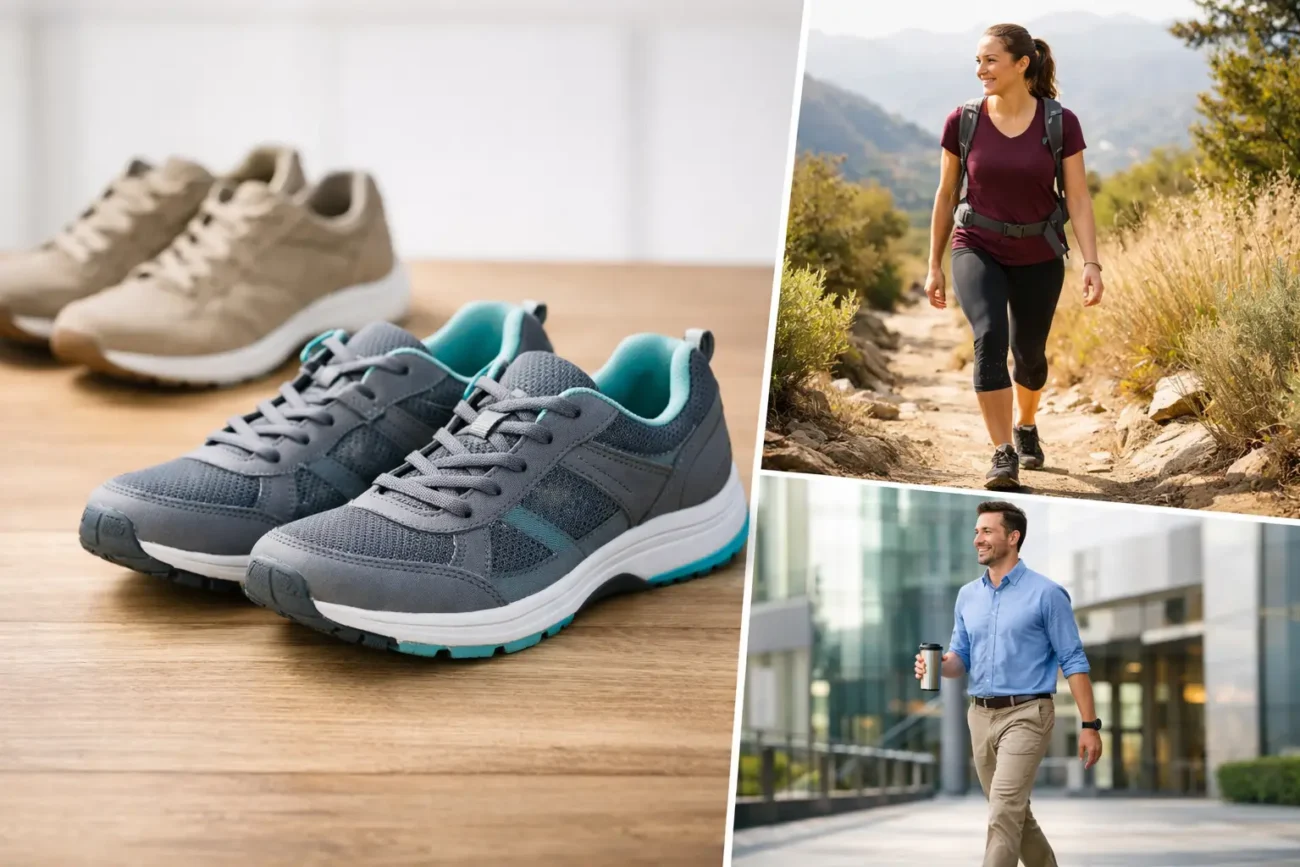
A walking shoe can look comfortable on the shelf and still leave your arches aching by the second mile. If you are wondering how to choose walking shoes, start with the reality of your own walks: where you go, how long you are out, what your feet feel like afterward, and whether you have a history of knee, hip, back, or foot pain.
The right pair is not necessarily the softest, trendiest, or most expensive. It is the one that gives your foot enough room to move naturally while providing the support and cushioning that suit your body and routine. For many people in midlife, this small decision can make regular walking feel more doable – and more enjoyable.
Start with your walking routine
A shoe for a 20-minute neighborhood walk has different demands from one used for long city days, hilly park paths, or a brisk hour of fitness walking. Think about your typical surface first. Smooth sidewalks and treadmills usually call for a flexible, lightweight walking or running shoe. Uneven gravel paths may feel better in a shoe with more traction and a firmer, more protective sole.
Also consider your pace and mileage. A person who walks casually a few times a week may prioritize all-day comfort and an easy fit. Someone walking several miles most days may benefit from a purpose-built walking or running shoe with durable cushioning and a stable platform. You do not need to buy a shoe labeled specifically for walking, but it should feel good during the kind of walking you actually do.
If you use one pair for errands, travel, exercise, and dog walks, look for a versatile option rather than trying to force a minimalist fashion sneaker into an active role it was not designed to fill.
How to choose walking shoes by fit, not shoe size
Shoe size is a starting point, not a verdict. Feet can change over time because of pregnancy, weight changes, arthritis, bunions, swelling, injury, and the normal flattening or widening that may occur with age. One foot is often slightly larger than the other, so fit the larger foot.
Try shoes on later in the day or after a walk, when feet are more likely to be at their fullest. Wear the socks you normally walk in and bring any orthotics or inserts you routinely use. A shoe that only works with a thin store sock may not work for your real life.
Your toes should have breathing room at the front. When standing, you generally want about a thumb’s width between your longest toe and the end of the shoe. Your longest toe is not always your big toe. The toe box should also be wide and deep enough that your toes can lie flat rather than being squeezed together or pressed from above.
At the heel, aim for a secure hold without painful rubbing or a pinched Achilles tendon. A little movement can be normal, but repeated heel slipping often leads to blisters and makes the shoe feel unstable. Walk around the store for several minutes, preferably on a hard surface if one is available. Notice any rubbing, pressure, numbness, or need to curl your toes. Do not assume discomfort will disappear after a break-in period.
Look for the right balance of cushioning and stability
Cushioning reduces the harsh feel of impact, especially on pavement. It can be helpful if you have joint sensitivity, walk long distances, or simply prefer a softer ride. But more cushioning is not automatically better. A very high, soft sole can feel wobbly for some people, particularly on uneven ground or if balance is a concern.
A stable walking shoe usually has a broad base, a heel that does not collapse easily when gently pressed, and a sole that resists excessive twisting through the middle. That does not mean it has to be stiff as a board. Your forefoot still needs to bend where your toes naturally bend as you push off.
Some shoes are marketed as motion-control or stability models. These can help certain walkers who roll markedly inward at the ankle, a movement called overpronation, or who need extra structure because of a specific condition. Yet not everyone needs this type of shoe. For many people, a neutral, well-fitting shoe with a stable base is enough. An overly controlling shoe can feel awkward if it does not match your natural gait.
If you have been comfortable in a particular level of cushioning and support, changing gradually is usually wiser than jumping to a dramatically different style. Feet and calves need time to adapt, especially when moving to a flatter or more minimalist shoe.
Pay attention to your foot shape and personal trouble spots
The best features depend on what your feet need. A wide toe box can be a relief for bunions, hammertoes, or toes that spread as you walk. People with high arches may prefer cushioning that distributes pressure more comfortably. Those with flatter feet sometimes appreciate a shoe with a supportive midsole or an insole that supports the arch, though flat feet do not automatically require a heavily structured shoe.
If you have plantar fasciitis, pain at the bottom of the heel that is often sharp with first steps in the morning, shoes with a supportive midsole and comfortable heel cushioning may be easier to tolerate than thin, flexible options. A removable insole is useful because it lets you add a clinician-recommended insert if needed.
For swelling, choose shoes with adjustable laces, straps, or an upper that has some give without feeling loose. Slip-on styles are convenient, but laces often provide a more customized, secure fit. A simple lacing adjustment can also reduce pressure on the top of the foot or help hold a narrow heel in place.
Persistent numbness, burning, open sores, or changes in foot color are not fitting problems to solve by shopping alone. People with diabetes, reduced circulation, neuropathy, significant arthritis, or a prior foot injury should ask a podiatrist or other qualified clinician for individualized guidance before relying on a new shoe to fix symptoms.
Test the shoe the way you will use it
Once you have narrowed down a pair, stand, walk, turn, and take a few quicker steps. Your foot should feel centered over the sole, not as if it is spilling over an edge or tipping side to side. Check that the tongue and laces do not create pressure across the top of your foot.
Trust feedback from your body, but give it context. A shoe may feel different after the first few walks because it is new, yet sharp pain, rubbing, tingling, or worsening soreness are reasons to stop wearing it. Mild muscle fatigue can occur when a shoe changes your stride slightly; joint pain or localized foot pain is less something to push through.
If possible, buy from a retailer with a reasonable return policy and test the shoes indoors first. A short walk around the house can reveal whether the heel slips, the arch feels intrusive, or the toe box becomes tight once your feet warm up.
Replace shoes before they start asking your body to compensate
Walking shoes rarely fail all at once. Their cushioning compresses and their outer soles wear unevenly, gradually changing how they feel. Look at the outsole for worn-down areas and place the shoes on a flat table to see whether they lean noticeably. Pay attention, too, to a return of aches that had improved or to a shoe that suddenly feels flat and less protective.
There is no single mileage rule that fits every walker. Body size, walking surface, shoe construction, and how often the pair is worn all affect its lifespan. Rotating between two pairs can allow the midsole foam time to rebound and may help you notice when one pair has lost its comfort.
Give yourself permission to choose comfort
A supportive shoe does not have to look medical, and a stylish shoe does not have to hurt. The useful standard is simpler: your shoes should make it easier to keep walking consistently. When a pair fits your foot, your route, and your current needs, it quietly supports one of the most practical habits for strength, mood, heart health, and independence as you age.
