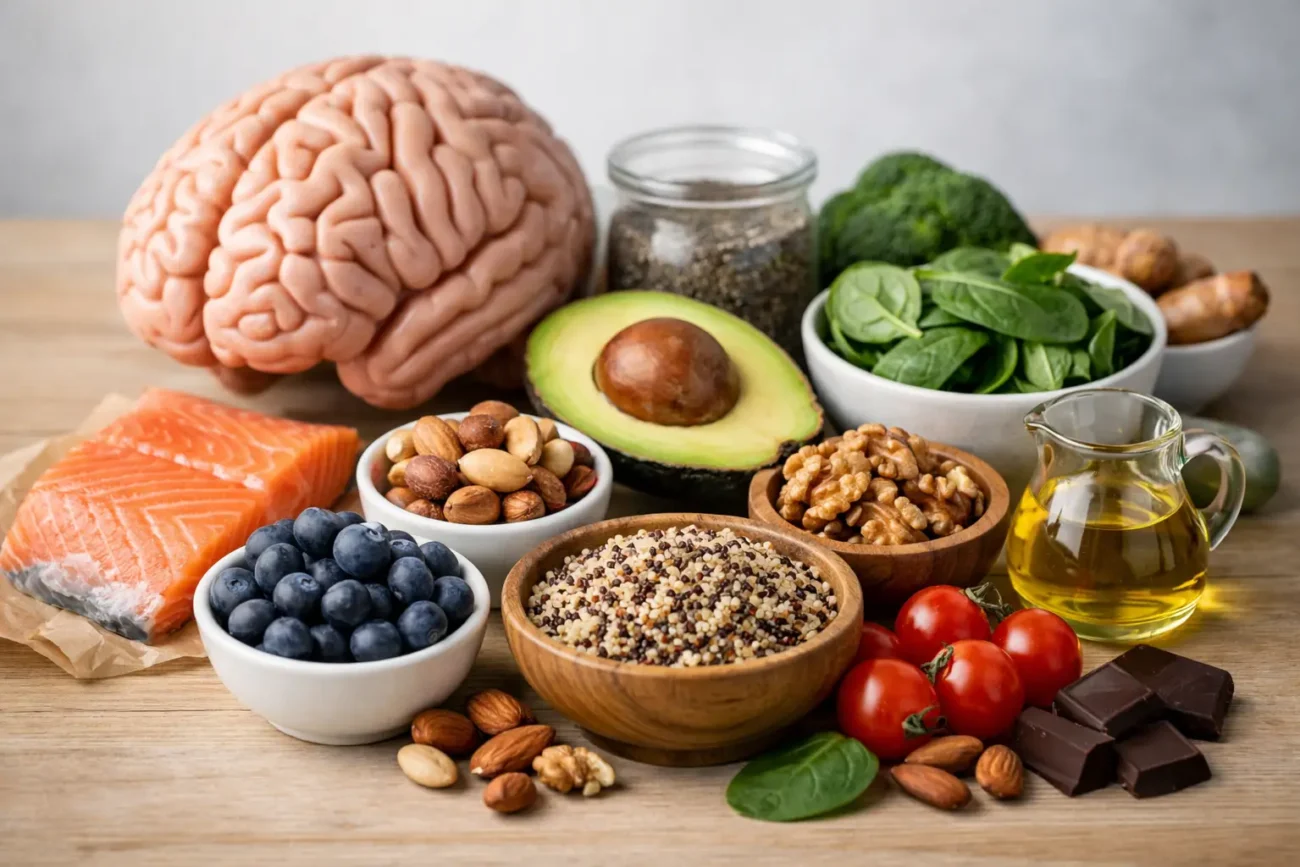
That occasional word-finding pause or afternoon mental fog can make anyone wonder whether food can help protect a sharp mind. The top foods for brain health will not guarantee freedom from cognitive decline, but a steady eating pattern can support the blood vessels, inflammation balance, and nutrient supply the brain depends on every day.
The strongest research does not point to one miraculous food. It points to an overall Mediterranean-style or MIND-style pattern: plenty of plants, regular fish, healthy fats, and fewer highly processed foods. That may sound familiar, but the details matter. A few purposeful changes can be more realistic, and more useful, than trying to overhaul every meal.
Top Foods for Brain Health: The Best Evidence
Leafy greens
Spinach, kale, arugula, Swiss chard, collards, and romaine deserve their reputation. They provide folate, vitamin K, carotenoids, and other compounds involved in normal cell function. Observational research has repeatedly found that people who eat leafy greens regularly tend to maintain cognitive function better as they age, though this does not prove greens alone are responsible.
Aim for a serving most days if you can. A large handful of spinach folded into eggs, a side salad at lunch, or sautéed greens alongside dinner all count. If you take warfarin or another medication affected by vitamin K, do not suddenly increase or decrease leafy greens. Consistency matters, so check with the clinician managing your medication.
Berries, especially blueberries and strawberries
Berries bring color for a reason. Their deep blue, purple, and red pigments include flavonoids, plant compounds studied for their effects on blood flow, oxidative stress, and inflammation. Several long-running studies associate higher berry intake with slower rates of cognitive aging, while smaller trials suggest berries may support certain aspects of memory in some adults.
Fresh berries are lovely, but frozen berries are just as practical and often more affordable. Add them to plain yogurt, oatmeal, a smoothie, or a bowl of cottage cheese. Choose unsweetened frozen fruit when possible. Berry-flavored snacks and sweetened juices do not offer the same benefit.
Oily fish
Salmon, sardines, trout, herring, mackerel, and anchovies supply omega-3 fats, particularly DHA, a structural component of brain cell membranes. Fish also supports heart and blood vessel health, which is closely tied to brain health. The brain needs a reliable blood supply, and many of the same habits that lower cardiovascular risk also support thinking and memory over time.
For most people, two servings of fish per week is a sensible target. Sardines on toast, salmon with roasted vegetables, or canned salmon mixed into a lunch salad can make that goal manageable. Larger predatory fish can contain more mercury, so vary your choices rather than relying heavily on shark, swordfish, king mackerel, or bigeye tuna.
If you do not eat fish, walnuts, chia seeds, flaxseed, and hemp seeds provide ALA, a plant omega-3. They are nutritious choices, although the body converts only a limited amount of ALA into DHA and EPA. An algae-based omega-3 supplement may be worth discussing with your clinician if your diet contains little or no seafood.
Nuts, seeds, and olive oil
A small handful of nuts is one of the simplest brain-friendly snacks. Walnuts get particular attention because they contain ALA omega-3 fats and polyphenols, but almonds, pistachios, hazelnuts, and mixed nuts all contribute fiber, minerals, and unsaturated fats. The goal is variety, not finding the one “perfect” nut.
Extra-virgin olive oil is another useful staple. It replaces saturated fats found in butter and some processed foods with mostly monounsaturated fat and naturally occurring plant compounds. In studies of Mediterranean-style eating patterns, olive oil is part of a larger picture, not a standalone treatment. Still, using it for salad dressings, vegetables, beans, and moderate-heat cooking is an easy, flavorful shift.
Portions matter because nuts and oils are calorie-dense. A closed handful of nuts or one to two tablespoons of olive oil is usually plenty for a meal or snack. That is not a reason to avoid them, especially if they replace cookies, chips, or heavily processed meat.
Beans, lentils, and whole grains
The brain uses a great deal of energy, and it tends to function best with steady blood sugar rather than dramatic spikes and crashes. Beans, lentils, oats, barley, quinoa, brown rice, and truly whole-grain breads provide fiber and slower-digesting carbohydrates. They also contain B vitamins and minerals that support general metabolic health.
This is especially relevant in midlife, when insulin resistance and rising blood pressure can become more common. Both are associated with a higher risk of later cognitive problems. A lunch of lentil soup and salad, overnight oats with berries, or a grain-and-bean bowl can support energy now while fitting a longer-term brain-health pattern.
Do not worry about making every carbohydrate choice perfect. Potatoes, fruit, and white rice can still have a place, particularly when paired with protein, vegetables, and healthy fat. The broader pattern over days and weeks is more meaningful than one bowl of pasta.
Cruciferous and colorful vegetables
Broccoli, Brussels sprouts, cabbage, cauliflower, peppers, tomatoes, carrots, and squash bring a broad range of vitamins, fiber, and protective plant compounds. Different colors tend to signal different phytonutrients, so a varied plate is more useful than eating the same vegetable on repeat.
There is no need to force yourself through foods you dislike. Roasting broccoli until its edges brown, shredding cabbage into a slaw, or keeping frozen vegetables on hand can be far more sustainable than buying ambitious produce that sits unused in the refrigerator. The best vegetable for your brain is often the one you will actually eat regularly.
Plain yogurt and other fermented foods
The connection between the gut and brain is a growing area of research. Fermented foods such as plain yogurt, kefir, kimchi, and sauerkraut may support a healthier gut microbiome, though researchers are still working out exactly how that translates to mood or cognition. They should be viewed as a potentially helpful part of a balanced diet, not a proven brain treatment.
Plain yogurt or kefir can be an especially useful choice because it provides protein and can replace a sugary breakfast or dessert. Look for products with minimal added sugar. If you have high blood pressure, keep an eye on sodium in kimchi, sauerkraut, and other packaged fermented foods.
What to Eat Less Often for a Clearer Long-Term Pattern
Brain-friendly eating is not only about adding foods. Diets high in sugary drinks, refined snack foods, frequent deep-fried meals, and processed meats are associated with poorer cardiovascular health and more inflammation. Those effects matter to the brain as well.
This does not require a strict “never” list. A pastry on vacation or a burger at a family gathering does not undo your health. It is the routine of what lands on your plate most often that counts. Try a replacement approach: berries instead of a sugary dessert some nights, nuts instead of chips during the afternoon, or beans and fish more often than deli meat.
How to Make Brain-Healthy Eating Stick
Start by choosing two habits rather than chasing a perfect menu. For example, have berries with breakfast four days a week and make fish for dinner once or twice weekly. Once those feel ordinary, add a daily leafy green or swap your usual cooking fat for olive oil.
It also helps to build meals around what is already convenient. Keep canned beans, canned salmon or sardines, frozen berries, oats, bagged greens, and nuts where you can see them. These are not glamorous pantry items, but they make a nourishing choice possible on a tired Tuesday.
Food is only one piece of cognitive aging. Regular movement, adequate sleep, treating hearing loss, managing blood pressure and diabetes, staying socially engaged, and challenging your mind all matter. If you have noticed a rapid or persistent change in memory, planning, language, or daily functioning, bring it up with a health professional rather than assuming it is normal aging.
A brain-supportive way of eating should feel satisfying, not punishing. Make your next meal a little more colorful, add a source of healthy fat or protein, and let the repeated small choices do the quiet work over time.
