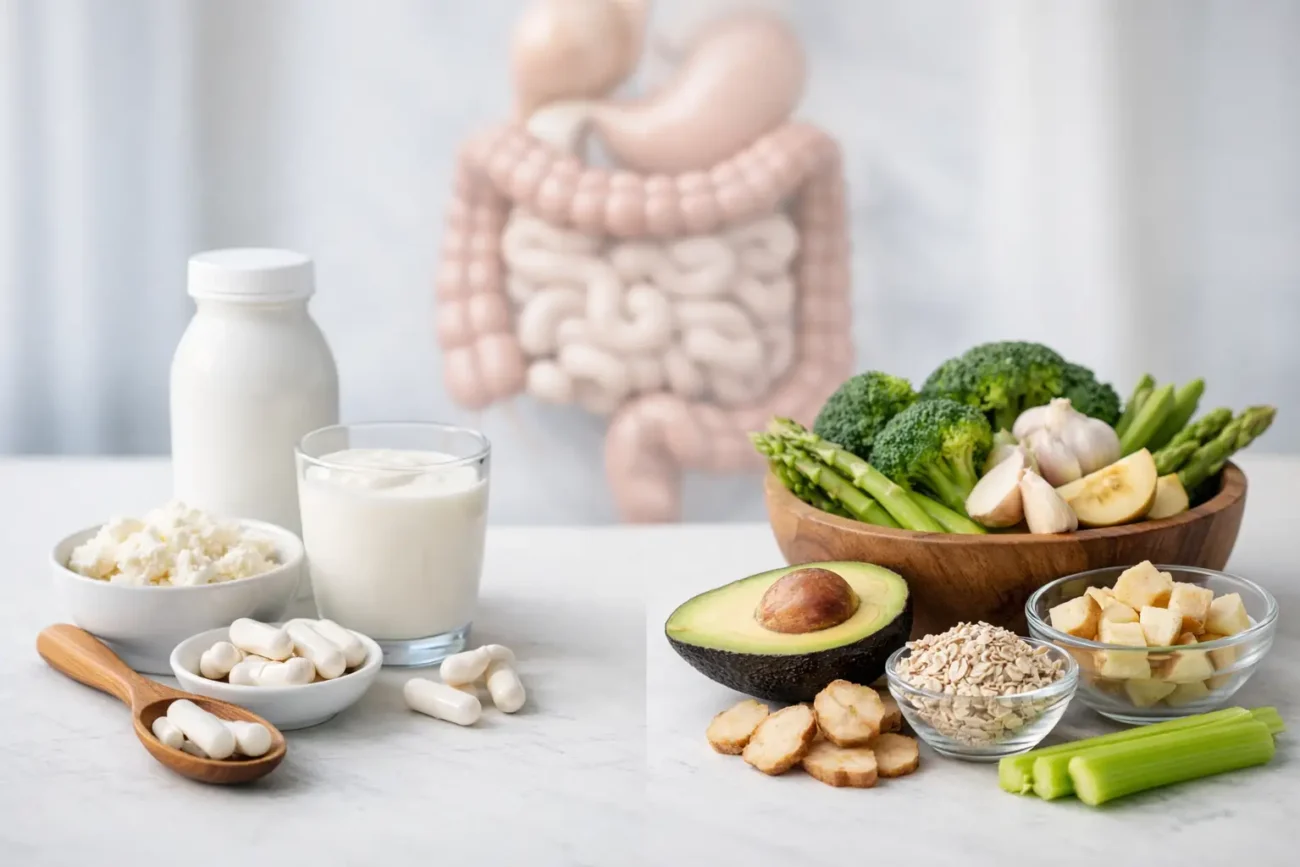
A yogurt labeled with live cultures, a fiber powder promising digestive regularity, a probiotic capsule with an impressively long list of strains – it is easy to wonder what you actually need. In the question of probiotics versus prebiotics, the most useful answer is not that one is better. They do different jobs, and many people benefit most from getting the basics of both through food.
Your gut contains a vast community of bacteria and other microorganisms, often called the gut microbiome. These organisms help break down parts of food that human digestive enzymes cannot handle on their own. They also interact with the immune system and produce compounds that support the gut lining. The science is still developing, and the microbiome is far more individual than wellness marketing suggests, but diet clearly matters.
Probiotics Versus Prebiotics: The Basic Difference
Probiotics are live microorganisms that, when consumed in adequate amounts, may provide a health benefit. Think of them as the living microbes themselves. Certain fermented foods contain them, and so do many supplements.
Prebiotics are types of carbohydrate, usually fiber, that resist digestion in the small intestine. They travel to the colon, where particular gut microbes can use them as fuel. Think of prebiotics as nourishment for helpful resident microbes, rather than new organisms arriving from outside.
This distinction matters because a probiotic is not automatically permanent. A microbe from a food or supplement may pass through the digestive tract without taking up long-term residence. It can still have an effect while it is there, depending on the strain and the person, but it is not necessarily “repopulating” the gut.
Prebiotics work differently. By regularly feeding microbes already adapted to your gut, they can encourage the production of short-chain fatty acids. These compounds, including butyrate, help nourish cells lining the colon and are an active area of research in digestive and metabolic health.
Then there are synbiotics, products or foods that combine probiotics and prebiotics. The idea is sensible, but the label alone does not guarantee a meaningful benefit. The specific ingredients, amounts, and your own tolerance still matter.
Where to Find Each One
Fermented foods are the most familiar food source of probiotics. Yogurt and kefir with live and active cultures are practical choices, provided they agree with you. Other options include some sauerkraut, kimchi, miso, tempeh, and fermented pickles. Not every fermented food contains live microbes by the time you eat it. Heat treatment and shelf stability can reduce or eliminate them, so labels matter.
Prebiotics are more widely available in everyday foods than many people realize. Onions, garlic, leeks, asparagus, Jerusalem artichokes, slightly green bananas, oats, beans, lentils, barley, and wheat-based foods can all contribute prebiotic fibers. Fruits, vegetables, nuts, seeds, and whole grains also supply a broader mix of fibers that supports gut health, even when they are not marketed as prebiotic foods.
That broader point is worth holding onto. Your microbiome does not thrive on a single trendy ingredient. It responds to the overall pattern of what you eat, especially variety among plant foods. A weekly rotation of beans, vegetables, fruit, whole grains, nuts, and seeds is more realistic – and likely more useful – than chasing one “gut health” superfood.
Which Is More Helpful for Your Goal?
If your goal is general digestive and long-term health, prebiotic-rich, fiber-containing foods are often the strongest place to start. Most adults do not consistently get enough fiber, and increasing it gradually can support regular bowel movements, fullness after meals, and healthier blood sugar patterns alongside microbiome benefits.
If you recently took antibiotics, have had a stomach infection, or are dealing with a specific digestive concern, a probiotic may be worth discussing with a clinician or pharmacist. Some strains have evidence for particular uses, such as reducing the risk of antibiotic-associated diarrhea or helping certain people with symptoms of irritable bowel syndrome. But the word “probiotic” is not a diagnosis or a treatment plan. Benefits are strain-specific, which means the evidence for one product cannot automatically be applied to another.
For constipation, prebiotics and fiber may help, but too much too quickly can lead to uncomfortable gas, bloating, or cramping. For diarrhea, a carefully selected probiotic may sometimes be useful, but persistent diarrhea deserves medical attention rather than prolonged self-treatment.
People with irritable bowel syndrome often need a more cautious approach. Foods high in certain fermentable carbohydrates can worsen bloating or pain for some people, even though they are considered prebiotic. This does not mean fiber is bad or that you must avoid healthy foods forever. It means the amount, type, and timing may need adjusting, ideally with guidance from a registered dietitian familiar with gastrointestinal conditions.
How to Add Prebiotics Without Feeling Worse
The biggest mistake is treating fiber like a challenge to complete overnight. If you currently eat few beans, whole grains, or vegetables, adding a large scoop of inulin powder or several servings of legumes at once can make your gut feel worse before it feels better.
Start with one modest change for a week or two. You might add oats at breakfast, include lentils in a soup, snack on a slightly firm banana, or add a serving of vegetables to lunch. Drink enough fluids, particularly as you increase fiber. Then notice what happens to your comfort, stool consistency, and regularity.
A little extra gas during a gradual transition can be normal. Severe pain, pronounced abdominal swelling, vomiting, blood in the stool, unexplained weight loss, or a major new change in bowel habits is not something to push through with more fiber or supplements. Check in with a healthcare professional.
Are Probiotic Supplements Worth Taking?
Sometimes, but they are not essential for every healthy adult. A supplement can be convenient when a clinician recommends a specific strain for a particular reason or when you do not enjoy fermented foods. Still, a high number of bacterial strains or billions of colony-forming units on the front label does not automatically mean better results.
If you choose one, look for a product that identifies the full strain, not just a broad species name. For example, the evidence behind a particular Lactobacillus or Bifidobacterium strain applies to that strain, not necessarily every member of the species. The package should also state how many live organisms are expected through the expiration date and provide clear storage instructions.
Give any new supplement a defined trial rather than taking it indefinitely out of habit. If you notice no meaningful improvement after several weeks, it may not be the right fit. More is not always better, and combining multiple probiotic products can make it harder to tell what is helping or causing symptoms.
Most healthy people tolerate probiotics well, though temporary gas or digestive changes can occur. People who are severely immunocompromised, critically ill, or have a central venous catheter should seek medical advice before using them, because rare but serious infections have been reported in vulnerable patients.
A More Useful Way to Think About Gut Health
The choice is rarely probiotics versus prebiotics as if they are competing teams. Probiotics may offer targeted, temporary support in certain situations. Prebiotic fibers help feed the microbial community you already carry and bring other nutritional benefits along with them.
For most people in midlife and beyond, the sustainable strategy is pleasantly unglamorous: eat a wider range of fiber-rich plants, include fermented foods if you enjoy and tolerate them, increase changes slowly, and be skeptical of products that promise to “reset” your gut. A healthy gut is less about finding the perfect capsule and more about building eating habits your body can live with for years.
